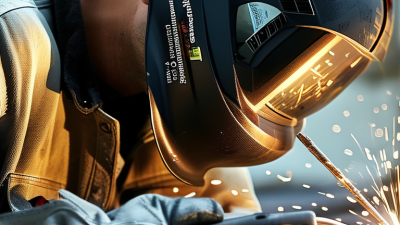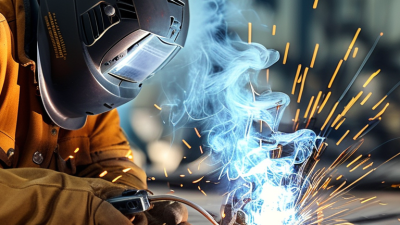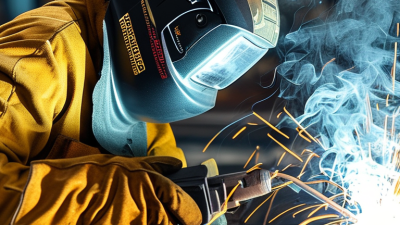
Choosing reliable FCAW welding machine suppliers in China requires more than comparing prices. Global buyers need stable arc performance, documented quality control, and practical export experience. This guide introduces manufacturers serving shipyards, steel fabricators, construction contractors, and repair workshops. It examines machine design, duty cycle, wire compatibility, feeding accuracy, and after-sales support. These details matter on a busy production floor.
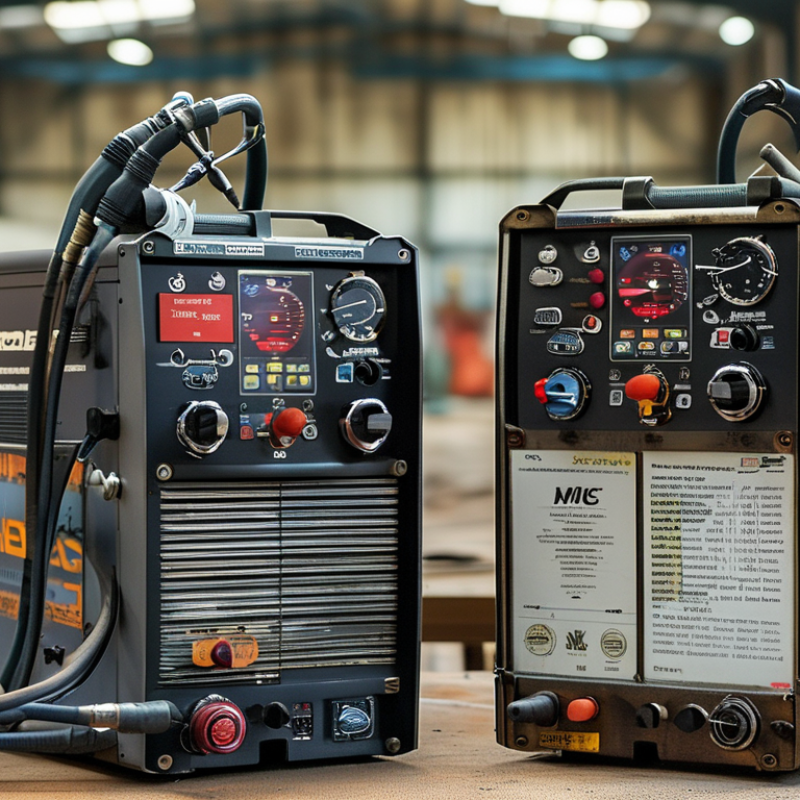
Fcaw In Welding demands consistent shielding, dependable wire feeding, and controlled heat input. A capable supplier should explain these factors clearly, not hide behind broad efficiency claims. Buyers should review factory testing records, sample welds, component sources, and product certifications relevant to their markets. Ask for photos of control panels, internal wiring, cooling systems, and completed inspections. Small details often reveal larger quality habits.
Supplier selection still involves uncertainty. A polished website proves little. One impressive sample does not guarantee long-term reliability. Buyers should request traceable test reports, realistic delivery schedules, spare-parts policies, and technical training options. Factory audits can help, although they cannot predict every field failure. This outline compares leading Chinese FCAW equipment suppliers through technical capability, manufacturing consistency, customization, pricing, and communication. It also considers the practical concerns that appear after installation, including unstable voltage, worn liners, operator training, and delayed replacement parts. The strongest supplier is not always the cheapest. It is the partner that answers difficult questions with evidence and accepts improvement when its process falls short.
Flux-cored arc welding (FCAW) uses a continuously fed tubular wire filled with flux. The electric arc melts the wire and base metal, forming a strong joint. Depending on the wire, shielding comes from decomposing flux, an external gas, or both. A 2024 MarketsandMarkets report projects the global welding equipment market to reach about USD 22.3 billion by 2028. This growth reflects demand from construction, shipbuilding, energy, and heavy machinery manufacturing.
FCAW machines typically include a power source, wire feeder, torch, work lead, and shielding-gas controls. Operators adjust voltage, wire-feed speed, polarity, and travel speed for each material thickness. The process handles outdoor work better than many gas-shielded methods, especially with self-shielded wire. Slag removal remains necessary. Do not skip it.
Field technicians often select FCAW for structural frames, pipelines, storage tanks, and repair work. The American Welding Society notes that welding procedure control strongly affects weld quality and worker safety. In practice, heat input, wind, moisture, and poor grounding can quickly create porosity or lack of fusion. A clean specification sheet cannot capture every workshop variable. That is where supplier testing matters. Buyers should request duty-cycle data, wire compatibility, service documentation, and trial weld records before purchasing. Even experienced teams sometimes underestimate setup time.
Choosing FCAW welding machine suppliers in China requires more than comparing catalog prices. A capable supplier should explain how its machines perform with different flux-cored wires, plate thicknesses, and working environments. Ask for duty-cycle data at realistic temperatures, not only laboratory figures. Check output stability, wire-feeder response, and arc-start performance through recorded tests.
Factory quality control deserves close attention. Request serial-number traceability, inspection records, and clear acceptance criteria for each shipment. The control panel should be simple enough for a new operator wearing gloves. Small details matter. Test whether the feeder maintains smooth wire delivery during a six-hour production shift. A supplier that avoids this request may be hiding practical weaknesses.
Technical support is equally important after delivery. Look for suppliers offering wiring diagrams, spare-parts lists, operator training, and response times in writing. Ask whether replacement boards, rollers, and torches are regularly stocked. Destination-market documentation should include electrical specifications, safety information, and applicable conformity reports. Some buyers focus too heavily on the lowest quotation. That shortcut can become expensive. A polished catalog is not proof of dependable production. I would also question suppliers that promise unusually high performance without explaining test conditions. Honest limitations are often more valuable than impressive claims. Request a sample weld, inspect penetration and slag removal, and compare results using your own wire and base metal.
China’s FCAW welding machine manufacturing base combines high-volume fabrication with increasingly controlled process engineering. Market research places the global welding equipment market above USD 16 billion in 2023, with continued growth expected through 2030, according to Grand View Research. This demand supports specialized production lines for power sources, wire feeders, torches, and integrated cooling systems.
On a typical Chinese production floor, technicians test arc stability across different wire diameters and plate thicknesses. They also check duty cycle, voltage accuracy, thermal protection, and feeder consistency. These details matter when FCAW machines operate in shipbuilding, steel structures, and heavy equipment workshops. Manufacturers commonly align product testing with IEC 60974-1 requirements. Some factories also use digital calibration records and batch-level component tracking. That improves reliability, although documentation quality can still differ between suppliers.
China’s strength is not only scale. It includes flexible tooling, fast component sourcing, and experience with export-oriented customization. The International Federation of Robotics reported China installed over 276,000 industrial robots in 2023, showing a large automation ecosystem supporting welding equipment production. However, automation does not guarantee better welding. Poor wire feeding or unstable grounding can still create defects. Buyers should request test welds, duty-cycle evidence, inspection records, and regional electrical certifications. A factory may look advanced, yet its after-sales testing can remain inconsistent. That point deserves careful review.
Global buyers evaluating Chinese FCAW welding machine suppliers should look beyond price. Fortune Business Insights estimated the global welding equipment market at about USD 16.4 billion in 2023, with continued growth expected through 2032. That expansion increases supplier choices, but also increases quality differences.
Request test records for actual FCAW operation, not only catalogue specifications. Check rated output, duty cycle, wire-feed stability, arc-start performance, and thermal protection. Ask for tests using the wire diameter and shielding gas required at your site.
A machine that performs well in a showroom may behave differently during an eight-hour production shift. Small details matter.
Verify compliance with ISO 60974-1 and review factory quality records. For welded structures, compare production results with ISO 5817 acceptance levels. Ask for serial-number traceability, calibration evidence, spare-parts availability, and remote troubleshooting procedures.
The International Organization for Standardization stresses documented control and repeatable inspection, not attractive claims. Do not accept certificates without checking their scope and validity. That step is often missed.
The supplier should provide a sample machine or controlled video test. Measure amperage and voltage independently when possible. Discuss warranty exclusions in plain language.
A low quotation may hide costly downtime, shipping delays, or limited service support. Buyers should also compare total cost over three years, including consumables and maintenance. No evaluation is perfect. Even experienced teams can overvalue specifications and undervalue operator training.
For global buyers, FCAW welding machine sourcing begins with export readiness. A dependable supplier should provide a commercial invoice, packing list, certificate of origin, and accurate customs codes. Check whether the machine supports your local voltage, frequency, plug type, and shielding requirements. The crate should protect wire feeders, control panels, and torches from moisture. Small details matter.
Certification must match the destination market. Request valid safety certificates, test reports, and serial-number records before payment. Do not rely on a certificate image alone. Confirm the issuing body and product model. A machine may meet one market’s requirements but fail another’s inspection. This is often overlooked.
Warranty terms deserve close reading. Ask whether coverage includes the power source, feeder motor, torch, and circuit boards. Clarify labor costs, shipping responsibility, and response times. A practical warranty normally states exclusions clearly, including misuse and unstable input power. After-sales support should include wiring diagrams, fault codes, spare-parts availability, and remote video diagnosis. Local technicians are valuable when production stops at midnight. However, remote support is not always enough. I have seen buyers receive quick replies but wait weeks for a simple control board. A written spare-parts plan can prevent that delay. Record the machine’s serial number and service history from installation onward.
| Evaluation Area | Buyer Data Dimension | Reference Requirement or Benchmark | Recommended Verification Evidence | Global-Buyer Consideration |
|---|---|---|---|---|
| Welding Process | FCAW operating capability | Confirm whether the machine supports self-shielded FCAW, gas-shielded FCAW, or both. The required polarity and feeder configuration should match the selected wire. | Technical datasheet, operating manual, wiring diagram, and a witnessed sample weld. | Do not assume that every MIG/MAG power source is configured for all FCAW wire types. |
| Rated Output | Output current, voltage, and duty cycle | Compare the rated current and duty cycle at the same ambient-temperature and test conditions. IEC 60974-1 is the principal international standard for arc-welding power sources. | IEC 60974-1 test data, nameplate photograph, factory test report, and independent inspection report where required. | Compare like-for-like ratings; a higher maximum current does not by itself prove better continuous performance. |
| Input Power | Voltage, phase, frequency, and allowable tolerance | Verify compatibility with the destination grid, such as single-phase or three-phase input and 50 Hz or 60 Hz operation. Confirm the stated input-voltage tolerance. | Electrical schematic, nameplate, user manual, and a pre-shipment power-on test. | Incorrect input configuration can cause nuisance tripping, unstable arcs, or equipment damage. |
| Wire-Feeding System | Wire diameter, spool size, feeding method, and feeder protection | Check the supported FCAW wire diameter, spool dimensions, drive-roll profile, liner type, torch connection, and feeder ingress-protection design. | Feeder specification sheet, spare-parts list, compatibility chart, and photos of the drive-roll and liner assembly. | Drive rolls and liners must be matched to tubular wire to reduce feeding resistance and bird-nesting risk. |
| Arc Functions | Operational controls and adjustment range | Review the availability of inductance or arc-dynamic control, burn-back, wire-inching, gas pre-flow and post-flow, crater fill, over-temperature protection, and voltage or current display. | Control-panel specifications, software or firmware revision, manual, and functional acceptance test. | Functions should be confirmed on the supplied configuration rather than listed only as optional features. |
| Safety and EMC | Electrical safety and electromagnetic compatibility | IEC 60974-1 covers safety requirements for arc-welding power sources. IEC 60974-10 covers electromagnetic-compatibility requirements for arc-welding equipment. | Applicable test reports, declaration of conformity, risk assessment, and product labeling. | Country-specific import rules may require additional documentation beyond the IEC test reports. |
| EU Market Access | CE conformity documentation | For applicable EU legislation, the manufacturer or authorized representative must complete the relevant conformity-assessment process and issue an EU Declaration of Conformity. CE marking is not a universal quality certification. | EU Declaration of Conformity, technical file summary where available, risk assessment, and product label photographs. | Check the exact directives and regulations applicable to the machine and its electrical configuration. |
| Quality Management | Manufacturing and process control | ISO 9001 certification demonstrates that an organization operates a quality-management system; it does not certify every individual welding machine. | Valid certificate showing the legal entity, scope, issuing body, and expiry date; verify the certificate with the issuer when practical. | Use quality-system evidence together with product testing, not as a substitute for product inspection. |
| Welding Quality | Welding-procedure and production controls | ISO 3834 provides quality requirements for fusion welding of metallic materials. The appropriate part depends on the required quality level and application. | Applicable ISO 3834 certificate, welding-procedure specifications, welder qualification records, and inspection plan. | For structural or safety-critical work, request application-specific procedure and traceability documentation. |
| Export Documentation | Commercial and shipping documents | A typical export file may include a commercial invoice, packing list, bill of lading or airway bill, certificate of origin when required, and any destination-specific conformity documents. | Draft document set before shipment, harmonized-system classification proposed by the exporter, and carton or crate marking layout. | Confirm the importer-of-record requirements, customs valuation, and document language before dispatch. |
| Packaging and Logistics | Protection, dimensions, weight, and shipment configuration | Record net weight, gross weight, package dimensions, pallet or crate material, moisture protection, lifting points, and container-loading quantity. | Packing list, packaging photographs, drop or vibration controls where applicable, and pre-shipment inspection report. | Accurate package data is essential for freight quotations, customs clearance, and warehouse planning. |
| Warranty | Coverage period, exclusions, and claim procedure | Warranty duration and scope are contractual rather than universally fixed. The agreement should define the start date, covered components, labor responsibility, freight responsibility, exclusions, and remedy. | Signed warranty terms, serial-number policy, spare-parts schedule, and sample claim form. | Clarify whether consumables, torches, cables, drive rolls, fans, and damage from incorrect input power are excluded. |
| After-Sales Service | Technical support and response time | Specify support channels, working hours, response target, troubleshooting procedure, remote diagnosis capability, and escalation contact. | Service-level agreement, support email or ticketing process, troubleshooting guide, and service contact list. | Time-zone coverage and availability of clear English documentation can materially reduce downtime. |
| Spare Parts | Availability and lead time | Identify commonly replaceable items such as contact tips, liners, drive rolls, torches, cables, cooling fans, relays, control boards, and fuses. | Parts catalogue, exploded diagram, recommended-stock list, quoted lead times, and part-number cross-reference. | Obtain a recommended commissioning kit and agree on the method for identifying parts by model and serial number. |
| Factory Acceptance | Pre-shipment inspection and performance test | Test the actual production unit for input operation, output stability, wire feeding, protection functions, display accuracy, accessories, and packaging completeness. | Signed FAT checklist, serial-number photographs, test readings, video evidence when appropriate, and independent inspection option. | Acceptance criteria should be written into the purchase contract before production begins. |
| Commercial Terms | Quotation, Incoterms, payment, and total landed cost | Compare the same machine configuration under the same Incoterms® rule, destination, currency, warranty basis, and accessory list. | Formal quotation, pro forma invoice, accessory schedule, production lead time, and clearly stated Incoterms® 2020 rule. | Evaluate total landed cost, including freight, duties, taxes, installation, spare parts, and technical support. |