company

What is Mild Welding Techniques and Applications in Metalworking?

Mild welding is a fundamental technique in metalworking, widely used in various industries. This method is favored for its simplicity and versatility. Mild welding employs moderate heat to join metals, making it accessible to both beginners and professionals.

This technique is especially useful in projects requiring precision without the risks of distortion. The applications range from automotive repairs to large-scale construction. Each application highlights the importance of using appropriate tools and skills.

Yet, mastering mild welding poses challenges. Factors like material selection and welding speed can significantly influence outcomes. Reflecting on these aspects helps improve techniques and results. Understanding mild welding not only enhances craftsmanship but also expands opportunities in the metalworking field.
What is Mild Welding Techniques and Applications in Metalworking?

Understanding Mild Welding Techniques in Metalworking

Mild welding techniques are essential in the metalworking industry. They provide strong, durable joints while being adaptable to various materials. According to recent reports, mild steel accounts for approximately 60% of all welding applications. This shows the widespread reliance on these techniques across different sectors.

MIG and TIG welding are two popular mild welding methods. MIG welding is favored for its speed and ease of automation. TIG welding, on the other hand, offers more control for intricate work. It's particularly useful in industries requiring high precision. Research indicates that using the right welding technique can improve efficiency by up to 25%, impacting overall production.

However, not all applications benefit equally from mild welding techniques. In some cases, improper settings can lead to defects, such as weak joints or excessive spatter. Understanding the strengths and limitations of each method is crucial. Combining technical knowledge with practical experience helps mitigate these challenges. Exploring different techniques can lead to more reliable outcomes in metalworking projects.

Types of Mild Welding Techniques and Their Applications

Mild welding techniques are essential in metalworking. They use low carbon steel to create strong joints with excellent ductility. Common methods include MIG, TIG, and stick welding. Each technique has specific applications, catering to diverse needs in industries.

MIG welding is popular for its speed and ease of use. It works well on thin materials and is often employed in automotive repair. TIG welding, on the other hand, offers precision. It’s ideal for intricate projects, such as art sculptures and aerospace component fabrication. Stick welding shines in outdoor environments. It is robust and can handle dirty or rusty surfaces.

Tips: Always clean the work area before starting. It enhances the quality of the weld. Pay attention to the settings on your welding machine. The right voltage and speed are crucial for a clean joint. Ensure you’re using the appropriate filler material. Incorrect choices can lead to weak joints, necessitating rework. Practice is key. Mistakes can be costly, but they lead to better skills over time. Embrace learning from each weld.

Advantages of Using Mild Welding in Fabrication Processes

Mild welding techniques offer a range of advantages in metalworking. These methods, which typically involve lower heat input, result in minimal distortion. This characteristic is vital in projects where precision is critical. Mild welds also produce less spatter and cleaner finishes, making post-welding cleanup easier.

One key benefit of mild welding is its efficiency. This technique allows for faster production times due to quick setup and operation. The process is less disruptive, keeping workflow smooth and continuous. Welders find it user-friendly and accessible, providing novices with a manageable learning curve.

**Tips:** To achieve the best results, ensure consistent preparation of the metal surfaces. Clean surfaces help create stronger welds. Also, consider practicing on scrap material to gain confidence. Over time, this practice can improve your technique and reduce errors. Embrace mistakes; they are stepping stones to mastery. Experimentation is essential in developing one’s skills.

What is Mild Welding Techniques and Applications in Metalworking? - Advantages of Using Mild Welding in Fabrication Processes

Technique Description Applications Advantages
MIG Welding A welding process that uses a continuous wire feed as an electrode and an inert gas to protect the weld pool. Automotive manufacturing, metal fabrication, construction. Speedy process, versatile, produces less waste.
TIG Welding Uses a non-consumable tungsten electrode to produce the weld, often requiring filler metal. Aerospace, thin materials, artistic metalwork. High precision, good for thin materials, clean welds.
Stick Welding Involves a coated electrode that generates the weld pool and is consumed during the process. Heavy industrial applications, outdoor welding. Portable, effective for thick materials, suitable for all positions.
Flux-Cored Arc Welding (FCAW) Similar to MIG but uses a tubular wire filled with flux to provide a shielding gas. Shipbuilding, construction, pipeline welding. Excellent for thick sections, high deposition rates, less post-weld cleaning.

Safety Considerations When Performing Mild Welding

Mild welding techniques present unique safety challenges in metalworking. According to the American Welding Society, approximately 53,000 reported injuries occur annually in welding. These incidents often arise from inadequate safety protocols and equipment. Understanding these risks is crucial for anyone in the field.

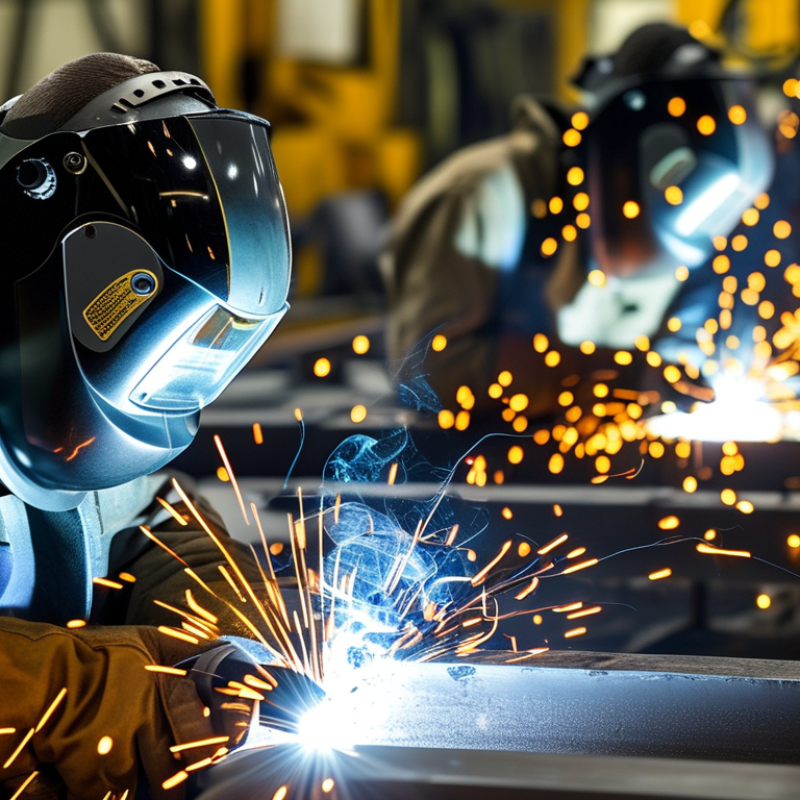
Proper personal protective equipment (PPE) is essential. Welders should always wear protective clothing, gloves, and helmets. These items significantly reduce exposure to heat, sparks, and ultraviolet radiation. Research indicates that a significant percentage of injuries could be avoided with correct PPE usage. Moreover, ensuring proper ventilation is critical. Fumes from welding can cause respiratory issues, making it vital to work in well-ventilated areas or use exhaust systems.

Regular training on safety practices is necessary. Many workers overlook repetitive safety checks, assuming they know the hazards. Misconceptions about risks can lead to accidents. By fostering a culture of safety, employers can mitigate dangers. Investing in training can yield a 30% reduction in workplace incidents. This change not only enhances well-being but also boosts productivity. Incorporating safety into daily practice is not just advisable; it’s essential.

Mild Welding Techniques and Applications in Metalworking

Common Challenges and Solutions in Mild Welding Practices

Mild welding techniques are widely used in metalworking, yet they come with specific challenges. One common issue is distortion. As metals heat up during welding, they expand, which can lead to warping. According to a report by the American Welding Society, approximately 30% of projects experience distortion-related issues. It can affect structural integrity.

Another significant challenge in mild welding is porosity. This defect appears as small holes in the weld, often due to contamination. A study from the International Institute of Welding indicates that up to 25% of welders report porosity as a frequent problem. Maintaining a clean workspace and using proper techniques is essential. Regular training on the importance of cleanliness can help reduce these occurrences.

Humidity and environment also play a role. Welders often encounter difficulties when working in humid conditions, leading to inconsistent results. The Welding Journal highlighted that 20% of weld failures could be traced back to environmental factors. Adequate preparation, like adjusting parameters based on conditions, is crucial. While these challenges are notable, there are proven solutions to mitigate them.