
- [email protected]
- Mon - Sat at 7:00AM to 9:00AM

How to Use Stick Welding for Beginners and Master Your Techniques?
Stick welding is a valuable skill for beginners eager to enter the world of metal fabrication. It combines simplicity and versatility, making it an excellent choice for various projects. With stick welding, or Shielded Metal Arc Welding (SMAW), you can tackle both minor repairs and significant constructions.
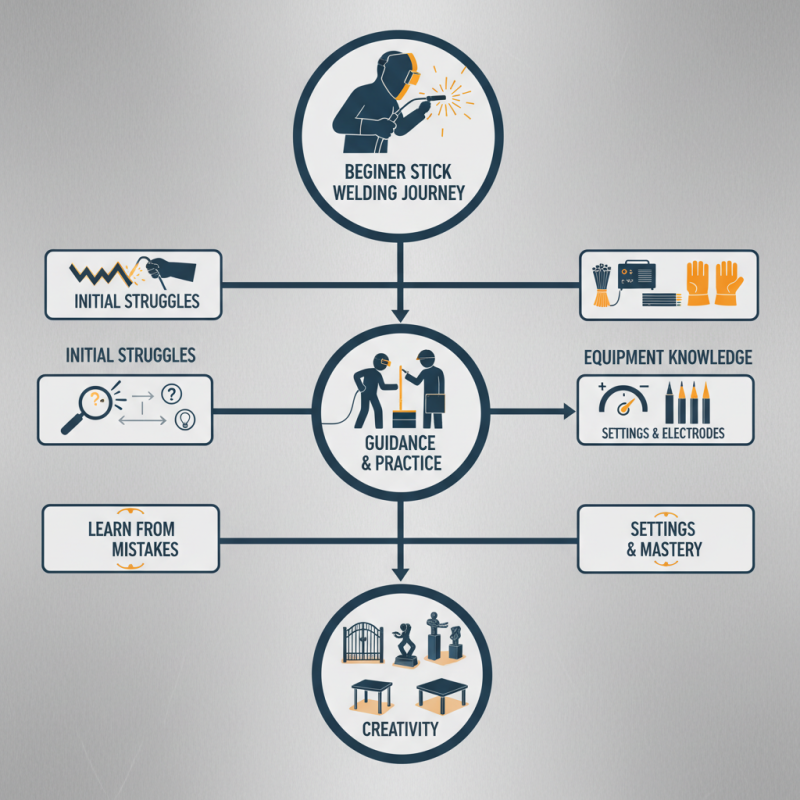
Mastering stick welding requires practice and patience. As a beginner, you may encounter challenges like inconsistent welds and difficulty controlling the arc. Reflecting on these struggles can help improve your technique. Embracing imperfections in your work is part of the learning process. Each mistake can serve as a lesson.
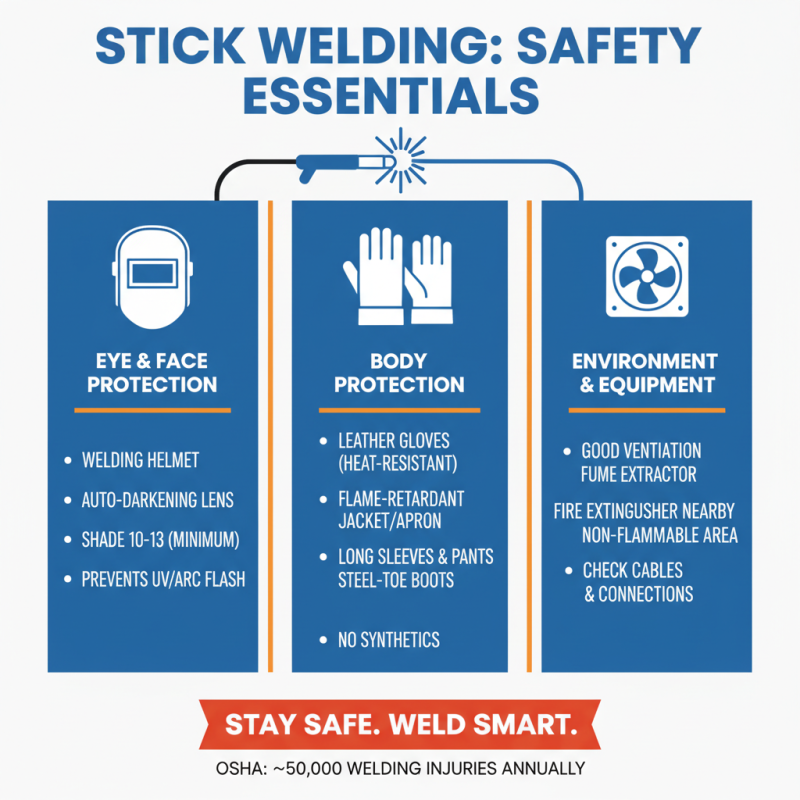
Understanding the equipment is crucial. A basic stick welder, electrodes, and protective gear are essential tools. Knowing how to set the correct amperage and selecting the right electrodes can make a significant difference. As you develop your skills, don’t hesitate to seek guidance from more experienced welders. Their insights can accelerate your learning journey. Stick welding opens doors to creativity and problem-solving in metalwork, whether for hobby projects or professional pursuits.
Understanding the Basics of Stick Welding for Beginners
Stick welding, or SMAW (Shielded Metal Arc Welding), is a fundamental skill for beginners. It involves an electric arc between a metal rod and the workpiece. This creates heat, melting the metal and forming a strong bond. According to the American Welding Society, over 90% of metal fabrication shops utilize stick welding techniques. Mastering this method is invaluable, especially in varied environments like construction and repair.
Begin with selecting the right electrode based on your base materials. Common choices include E6011 and E7018. Each type offers unique characteristics, such as penetration and bead appearance. Practice is crucial here. Start by adjusting your arc length and travel speed to understand the impact on weld quality. A study by Weld.com reported that nearly 30% of beginners encounter issues with distortion. Learning to control heat input can help avoid such mistakes, ensuring stronger joints.
The right stance is equally important. Positioning yourself comfortably will help you maintain consistency. Many beginners feel frustrated with their initial results. This is normal, as it can take time to find your rhythm. Keep a journal to track your progress. Documenting your techniques and challenges can lead to significant improvements over time. Building a solid foundation in stick welding opens doors to advanced welding techniques and enhances overall skills.
How to Use Stick Welding for Beginners and Master Your Techniques?
| Technique | Description | Common Mistakes | Tips for Improvement |
|---|---|---|---|
| Weaving | This technique involves moving the electrode back and forth to create a weave in the weld bead. | Inconsistent motion can lead to uneven beads and insufficient penetration. | Practice a smooth and consistent rhythm to improve bead appearance. |
| Circle Technique | This method uses a circular motion while moving the electrode along the joint. | Too large of a circle can cause lack of fusion. | Keep the circles small and controlled for better weld quality. |
| Straight Line | The electrode is moved in a straight line along the weld joint. | Inconsistent speed can lead to inconsistent bead size. | Maintain a steady hand and a consistent speed to ensure even beads. |
| Stringer Beads | This involves laying narrow beads one after the other with minimal travel. | Too much gap between beads can weaken the joint. | Overlap slightly on each bead to ensure a strong joint. |
| Tack Welding | Temporary welds used to hold pieces together before final welding. | Inadequate support can lead to misalignment. | Make sure tacks are evenly spaced and provide enough support during the final weld. |
Related Posts
-
Best Stick Welding Techniques for Global Buyers Guide?
-
Top 5 Best Core Welding Wire Options for Superior Welding Results?
-

Top 10 Giant Welding Companies in China You Should Know?
-
Top 10 Fcaw Welding Electrode Brands in China for Professionals?
-
China Best Stick Welding Techniques for Beginners and Professionals?
-

What is Aws Classification and How Does It Work?