How to Choose the Right Fcaw In Welding for Your Projects?
Choosing the right Flux-Cored Arc Welding (FCAW) process for your project can be daunting. Industry expert James Miller states, "Understanding FCAW means knowing your materials and your environment." His insight emphasizes the importance of making informed decisions based on specific needs.
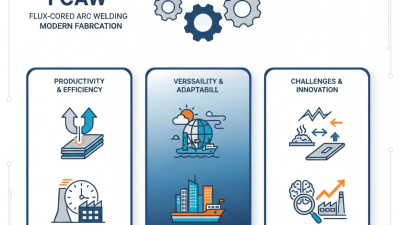
FCAW is vital for various welding applications, particularly in construction and manufacturing. Selecting the appropriate FCAW technique can impact work quality and efficiency. Factors such as the base materials, desired strength, and environmental conditions all play a role. Each welding project has unique challenges, and a one-size-fits-all approach often fails.
Additionally, understanding the nuances of FCAW, like wire type and shielding gas, can significantly influence the outcome. Beginners often overlook these elements and may face difficulties. As Miller suggests, comprehending the intricacies of FCAW is essential for success. Evaluating your project’s requirements is key. A reflective approach will lead to better decisions in choosing FCAW methods.
Understanding Flux-Cored Arc Welding (FCAW) Basics
Flux-Cored Arc Welding (FCAW) is a highly effective welding process. It combines the benefits of both MIG and stick welding. FCAW uses a tubular wire filled with flux, which produces shielding gas during welding. This protects the weld from contamination. According to the American Welding Society, FCAW is widely used in construction and fabrication. It excels in outdoor and windy conditions due to its self-shielding capabilities.
The choice between gas-shielded and self-shielded FCAW impacts the application. Gas-shielded FCAW is cleaner; it requires an external gas supply. It is ideal for indoor work and produces less spatter. Self-shielded FCAW is beneficial for outdoor use. It is often preferred in fields like shipbuilding and heavy equipment. Statistics show that FCAW can increase productivity by 20-30% compared to traditional methods.
Welders must consider electrode diameter and welding position when selecting FCAW. A larger diameter allows for deeper penetration. A smaller diameter is useful for thinner materials. The Welding Research Council suggests that proper electrode selection impacts the overall quality of the weld. Understanding these elements is crucial for achieving accurate and reliable results.
How to Choose the Right FCAW In Welding for Your Projects?
| Parameters |
Description |
Suitable Applications |
Wire Types |
Gas Requirements |
| FCAW-G |
Gas-shielded flux-cored arc welding |
Thin materials, industrial fabrication |
ER70S-6, E71T-1 |
Argon or Argon-CO2 mix |
| FCAW-S |
Self-shielded flux-cored arc welding |
Outdoor use, windy conditions |
E71T-GS, E71T-11 |
No gas required |
| Material Thickness |
Gauge of material to be welded |
Heavy structural work |
1.0 mm to 10.0 mm |
Varies based on thickness |
| Positioning |
Welding position |
Pipe welding, vertical structures |
Flat, horizontal, vertical |
Mild to moderate environmental conditions |
Different Types of FCAW Wires and Their Applications
FCAW, or Flux-Cored Arc Welding, offers various wire types for different applications. Understanding these can enhance your welding projects. A few common options include gas-shielded and self-shielded FCAW wires. Gas-shielded wires provide better quality welds with reduced spatter. They are ideal for outdoor projects with wind exposure. On the other hand, self-shielded wires are perfect for less sheltered environments. They require no external gas, making them easier to use on job sites.
When choosing FCAW wire, consider material compatibility. For instance, ER70T-1 is ideal for carbon steel, while ER308LT is better for stainless steel. Select based on your project needs. An informed decision can ensure quality welds and durability. Don’t overlook the importance of matching wire diameter to your power source and job requirements. This might seem trivial but can significantly affect your outcomes.
Tips: Always run a few practice beads before starting your project. Observe the result to gauge the wire's adaptability. Ensure the welding machine's settings align with the wire type. This step can save time and material. Pay attention to joint preparation; clean surfaces ensure strong welds. Each project may need adjustments. Reflect on past experiences to refine your technique.
Evaluating Project Requirements for FCAW Selection
When selecting the right flux-cored arc welding (FCAW) wire for your projects, it's essential to evaluate project requirements thoroughly. Think about the materials you'll be working with. Different wires are suitable for various base metals. For instance, carbon steel, stainless steel, and even some low-alloy steels require specific wire types. Make a list of materials. This will guide you in choosing the appropriate FCAW wire that meets your project needs.
Consider the welding environment as well. FCAW can be performed indoors or outdoors. If you're working outdoors, look for wires designed to handle wind and other elements. The shielding gas used can also affect your weld's quality. A higher level of expertise may be needed for certain wires. Are you prepared to handle that?
It's important to reflect on your skill level and project scope. Complex projects can lead to mistakes. Investing in the right wire may save you time and money. Don't overlook the details; they can make a difference. Each project offers a learning opportunity. Embrace the process and always seek to improve your skills.
Assessing Equipment Compatibility for Optimal FCAW Performance
When working with Flux-Cored Arc Welding (FCAW), equipment compatibility is crucial. The right power source must match the welding wire's specifications. Selecting a voltage that aligns with your wire type ensures optimal arc stability. Insufficient power can lead to inconsistent welds and increased spatter.
The choice of a suitable welding machine is also important. Some machines only support specific wire diameters and types. This limitation can affect your overall performance. Running a thicker wire on an incompatible machine may result in burn-throughs. Pay close attention to the machine’s duty cycle as well. A higher duty cycle can improve productivity, but many beginners overlook this aspect.
Don’t forget the gas and nozzle considerations. FCAW can be self-shielded or gas-shielded, affecting equipment choice. If you're using gas, ensure that the gas flow rate meets the wire type requirements. Wrong gas settings can lead to poor fusion and increased porosity in the weld. Remember, the optimal setup often requires trial and error. Take notes during experiments to refine your process and improve outcomes.
Safety Considerations When Using FCAW in Projects
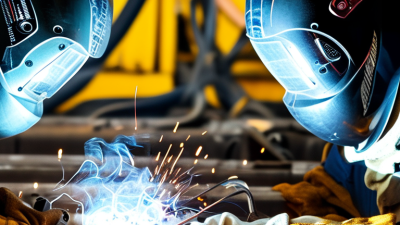
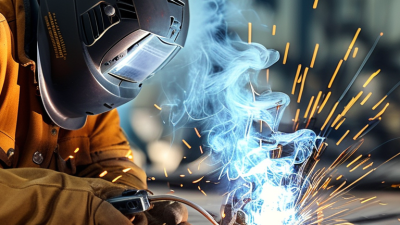
When utilizing flux-cored arc welding (FCAW), safety must be a top priority. The process generates intense light and heat, which pose risks. Wearing appropriate personal protective equipment (PPE) is essential. A welding helmet with a proper shade can protect your eyes. Long sleeves and gloves help guard against burns.
Ensuring good ventilation is also crucial. Fumes can be hazardous and may cause respiratory issues.
Consider your workspace carefully. Ensure it is free from flammable materials. Sparks can ignite nearby items, leading to dangerous fires. A clean environment allows for better focus during the welding process. Additionally, avoid working alone, especially during more complex tasks. Having a partner can facilitate communication and enhance safety.
Understanding the equipment is necessary. Know the duty cycle of your welder. Overheating can lead to equipment failure. Always inspect cables and connections before use. This can prevent accidents caused by faulty equipment.
While experience builds confidence, remember that overestimating your skills can lead to mistakes. Be mindful and approach each project with respect and caution.