Global welding procurement often begins with a small mark on a box: E7018, ER70S-6, or another AWS code. That mark carries more information than many buyers expect. It can describe chemical composition, tensile strength, welding position, coating type, and testing requirements. However, Aws Classification is not a universal product language. Its meaning depends on the applicable AWS specification, revision, and purchasing standard.
The American Welding Society’s Welding Workforce Data projects a potential shortage of 330,000 welding professionals in the United States by 2028. This pressure makes consistent sourcing, qualification, and documentation increasingly important. Meanwhile, the International Organization for Standardization uses standards such as ISO 2560 for covered electrodes, while AWS A5.1 follows a different classification structure. The codes may appear similar. They are not automatically interchangeable.
A reliable sourcing process should connect the AWS designation with mill certificates, batch numbers, third-party test results, and actual welding conditions. Imagine comparing two E7018 electrodes in a warehouse. One may satisfy moisture-control requirements, while the other has unclear storage history. The printed code alone cannot reveal everything. It is only the starting point.
Market reports from Grand View Research and MarketsandMarkets show continued expansion in global welding equipment and consumables demand. Yet market growth does not remove technical risk. Procurement teams still need traceability, supplier audits, and engineer-approved substitutions. Some classifications remain confusing, even for experienced buyers. That is worth admitting. This guide explains how to read Aws Classification carefully, compare international standards, and make sourcing decisions that are technically defensible, commercially practical, and safer for global supply chains.
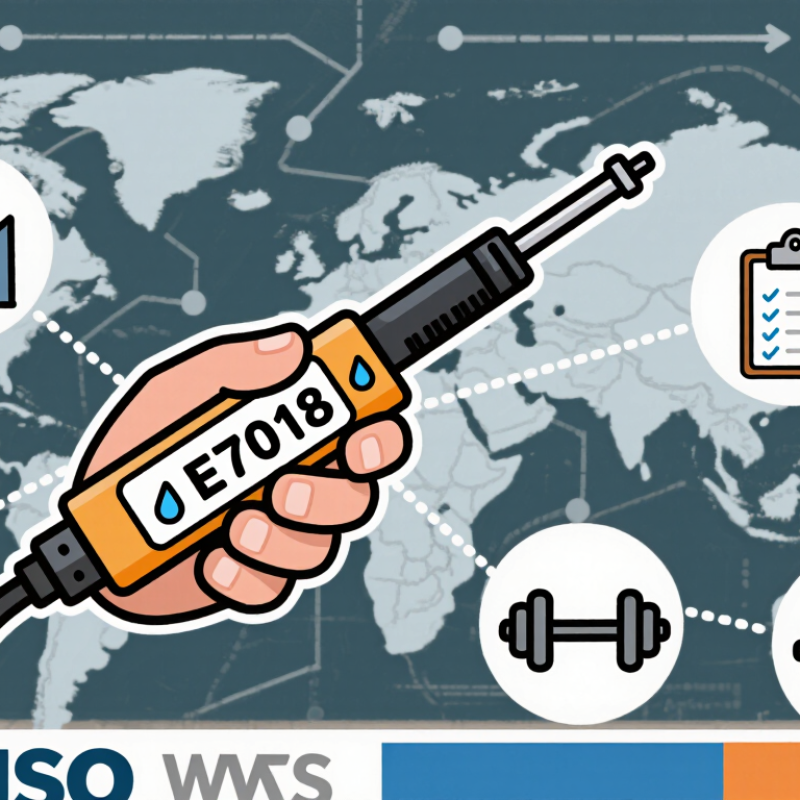
Defining AWS classification is essential in global welding sourcing. It identifies a filler metal’s performance, not merely its product name. In E7018, “E” means electrode, “70” indicates 70 ksi tensile strength, “1” covers all welding positions, and “8” describes coating and current requirements. This code gives buyers a common technical language across countries. However, AWS classification is not a customs code or a complete quality certificate.
The classification must match the base metal, joint design, welding position, and service environment. AWS A5 standards provide the technical framework, while mill certificates, batch testing, and procedure qualification records verify actual consistency. A supplier may offer an equivalent classification, but equivalent does not always mean interchangeable. That assumption is risky. I still see sourcing teams comparing only tensile strength and ignoring hydrogen control, impact requirements, or storage conditions.
Automation makes accurate classification more important. The International Federation of Robotics reported 541,302 industrial robot installations worldwide in 2023, showing continued growth in automated production. Automated welding needs stable wire chemistry, feeding performance, and repeatable deposition. The United Nations Industrial Development Organization’s Industrial Development Report 2024 also highlights the growing importance of technology-ready manufacturing capabilities. For global sourcing, buyers should record AWS classification, applicable standard edition, test results, traceability details, and regional equivalency notes. The paperwork may feel excessive. It is often cheaper than correcting a failed weld after production begins.
Understanding the structure of AWS classification codes helps buyers compare welding consumables across suppliers. The code is not random. Each position communicates a technical requirement.
For example, in E7018, “E” identifies an electrode. “70” indicates a minimum tensile strength of 70,000 pounds per square inch. The number “1” describes the approved welding positions. The final digit, “8,” relates to coating type, welding current, and operating characteristics. Small details matter. A missing digit can change the product’s application.
In practical sourcing work, I place the classification beside the purchase specification, material grade, diameter, and test requirements. A 3.2-millimeter electrode may carry the same classification as a 4.0-millimeter product, but packaging, drying controls, and delivery conditions can differ. Classification codes also vary by product category, so one pattern should not be applied blindly.
I once treated a familiar code as sufficient evidence. That was a mistake. The supplier’s certificate later showed different impact testing conditions. Buyers should verify the complete standard, edition, mechanical results, position capability, and required certificates. Photos of labels help, but they are not proof. Independent test records are stronger. Ask for batch traceability, storage instructions, and clearly stated deviations. A code gives structure, not the entire purchasing decision.
How to Understand AWS Classification for Global Sourcing?
Matching AWS Classifications with Material and Performance Needs
AWS classifications are more than product codes. They describe a welding consumable’s chemistry, strength, usability, and application limits. A sourcing team should match the classification with the base material and required service conditions.
For carbon steel, review tensile strength, yield strength, elongation, and impact performance. These values show whether the deposited weld can handle the planned load. Position, polarity, coating type, and moisture resistance also affect field performance. A code suitable for flat welding may create problems on vertical joints. Small details matter.
I have seen buyers select a familiar classification without checking the parent material. That shortcut can cause cracking, weak fusion, or unnecessary cost. Low-temperature structures need impact data at the specified temperature. Corrosion-sensitive assemblies may require a compatible alloy system. For each shipment, request the current standard edition, certificate, lot number, test results, and storage guidance. Verify that the report matches the actual packaging and production batch. A classification table can still mislead when conditions differ. It is not the whole decision.
During global sourcing, compare equivalent classifications carefully. Similar-looking codes may differ in testing rules or acceptance requirements. Confirm local engineering approval before changing filler materials. Trial welds, visual inspection, and qualified procedure tests provide stronger evidence than a catalogue line. Keep records of heat numbers, inspection results, and supplier responses. That discipline supports reliable purchasing, even when specifications are imperfect.
AWS classification helps buyers identify welding consumables by strength, usability, coating, and welding position. An electrode marked E7018, for example, indicates key performance characteristics, not just a product name. The numbers describe tensile strength and position requirements. The final characters also indicate coating and current compatibility. This structure supports clearer communication during global sourcing.
International welding requirements may use different classification codes and test methods. A material accepted under one system is not automatically an equivalent under another. The required impact temperature, chemical limits, deposited metal strength, and hydrogen control can differ. Procurement teams should compare the complete standard, not only the first few characters. A technical review is essential.
In practical sourcing, I would request the certificate, batch number, test temperature, and declared welding parameters. I would also compare the supplier’s data with the approved welding procedure. A trial weld can reveal issues that paperwork misses, such as unstable arc behavior or excessive slag. Small details matter. One common mistake is treating classification as a universal translation. It is only a starting point. I have found that clear cross-reference tables reduce confusion, but they still need qualified engineering judgment. Even experienced teams can overlook regional acceptance rules. That possibility deserves attention before production begins.
| Technical Dimension | AWS Classification or Requirement | Common International Requirement | Key Difference for Global Sourcing | Documents to Request from a Supplier |
|---|---|---|---|---|
| Structural steel welding | AWS D1.1/D1.1M is a widely used code for welded structures made from carbon and low-alloy constructional steels. It addresses design, fabrication, qualification, inspection, and acceptance requirements within its stated scope. | EN 1090-2 covers execution of steel structures in many European projects. ISO 3834 defines welding quality requirements, while ISO 15614-1 is commonly used for welding procedure qualification. | The applicable document depends on the contract, material, design rules, and jurisdiction. A procedure qualified under one system is not automatically qualified under another. | Applicable code edition, approved WPS, PQR or WPQR, welder qualifications, inspection plan, material certificates, and nonconformance records. |
| Bridge and highway structures | AWS D1.5/D1.5M is specifically intended for highway bridge welding and includes requirements that supplement or differ from general structural steel practice. | European bridge projects may combine EN 1090-2, execution class requirements, project specifications, and inspection provisions based on the governing national or regional framework. | Fatigue performance, fracture control, inspection categories, and traceability can be more demanding than ordinary building fabrication. | Welding and inspection procedures, consumable control records, weld maps, traceability matrix, NDT reports, repair history, and personnel qualification records. |
| Aluminum welding | AWS D1.2/D1.2M addresses welded aluminum structures, including applicable workmanship, qualification, fabrication, and inspection provisions. | ISO 15614-2 is used for qualification of welding procedures for aluminum and its alloys. ISO 9606-2 covers qualification testing of welders for aluminum and its alloys. | Alloy groupings, test-piece ranges, essential variables, and acceptance criteria may differ. Aluminum heat input and distortion control require special review. | Alloy and temper identification, WPS, procedure qualification record, welder certificate, filler-metal data, pre-cleaning method, and distortion-control plan. |
| Stainless-steel welding | AWS D1.6/D1.6M provides requirements for welding stainless-steel structural components and should be applied together with the project design and material specifications. | ISO 15614-1 can be used for procedure qualification of metallic materials, with ISO 9606-1 commonly used for welder qualification of steels. Product-specific rules may add requirements. | Corrosion resistance, heat tint, interpass temperature, shielding gas, and contamination control may be contract-critical even when not fully defined by a general welding code. | Material certificates, WPS and PQR/WPQR, filler-metal classification, shielding-gas certificate, purge records where applicable, and visual or NDT reports. |
| Welding procedure qualification | AWS qualification provisions define essential variables, test requirements, qualification ranges, and acceptance criteria for the applicable AWS code. | ISO 15614 series establishes a framework for qualifying welding procedures by welding and testing a qualification test piece. The exact part depends on the material and process. | The same WPS may require requalification because process numbers, material groups, thickness ranges, joint details, or test methods are classified differently. | Signed WPS, PQR/WPQR, test-laboratory reports, test-piece details, essential-variable range, and evidence that the qualification covers production conditions. |
| Welder qualification | AWS codes generally specify performance qualification requirements for welders and welding operators, including process, position, material, thickness, and test conditions. | ISO 9606-1 applies to qualification testing of welders for fusion welding of steels. Other parts cover materials such as aluminum, copper, nickel, and titanium alloys. | Qualification ranges and continuity rules can vary. Confirm whether the certificate covers the exact process, position, joint type, material group, and product thickness. | Welder certificate, test date, process designation, material group, welding position, joint type, thickness range, continuity evidence, and certifying body details. |
| Welding quality management | AWS fabrication codes contain technical welding and inspection requirements, but they do not generally replace a complete quality-management system for all manufacturing activities. | ISO 3834-2, ISO 3834-3, and ISO 3834-4 define comprehensive, standard, and elementary quality requirements for fusion welding of metallic materials. | ISO 3834 focuses on welding-quality system controls, while an AWS construction code focuses more directly on code-compliant fabrication and acceptance. | Quality manual, welding coordination responsibilities, equipment-calibration records, consumable storage procedure, internal audit records, and corrective-action logs. |
| Weld imperfections and acceptance | AWS acceptance criteria are defined by the applicable AWS code, project specification, weld category, loading condition, and inspection method. | ISO 5817 provides quality levels for imperfections in fusion-welded joints, commonly designated as levels B, C, and D, with Level B generally representing the most stringent requirements. | Acceptance limits for porosity, undercut, cracks, lack of fusion, and dimensional defects may not match. The purchase specification must identify the governing criteria. | Inspection and test plan, visual inspection reports, NDT procedures, NDT personnel qualifications, radiographic or ultrasonic reports, and repair acceptance records. |
| Pressure equipment and piping | AWS structural codes are not general substitutes for pressure-equipment construction rules. Welding qualification may need to follow the pressure-design code specified by the project. | ASME Section IX is commonly used for qualification of welding and brazing procedures and personnel when required by an applicable pressure-vessel or piping construction code. Regional rules may also apply. | Confirm the product code, legal jurisdiction, inspection authority, design pressure, service conditions, and required qualification system before placing an order. | Design and construction code, WPS, PQR, welder performance qualification, material traceability, heat-treatment records, pressure-test records, and authorized inspection reports. |
| Welding symbols and drawings | AWS A2.4 provides a system for welding, brazing, and nondestructive examination symbols used on engineering drawings. | ISO 2553 defines international rules for representing welded joints on technical drawings. | Symbol conventions, arrow-side interpretation, reference-line arrangements, and supplementary indications may differ between systems. | Controlled drawings, symbol legend, weld schedule, joint details, revision status, and written clarification of any converted symbols. |
| Global sourcing decision point | AWS compliance should be stated with the exact document designation, edition, applicable clause, material scope, and project-specific amendments. | International sourcing may require a combination of ISO standards, regional execution rules, product legislation, and customer specifications. | “Equivalent to AWS” is not sufficient by itself. A documented technical-gap review is needed before accepting alternative qualifications or inspection criteria. | Compliance matrix, approved deviations, cross-reference of qualifications, inspection plan, manufacturing schedule, risk assessment, and final quality dossier index. |
AWS classification gives global sourcing teams a common technical language for welding consumables. Codes such as E7018 or ER70S-6 identify strength, usability, and chemical requirements. They do not replace supplier verification. During audits, compare the classification with the approved welding procedure, mill test certificate, and purchase order. Check heat numbers, production lots, packaging, and storage conditions. A damp electrode box can create serious quality problems.
The ISO Survey 2022 recorded 1,265,216 ISO 9001 certificates worldwide. That figure shows certification is widespread, but it does not prove every weld deposit is controlled. The World Economic Forum’s Future of Jobs Report 2023 also lists quality control among important workplace skills. Use that principle practically. Request classification test reports, batch traceability, calibration records, and nonconformance data. Then inspect a sample shipment before approving regular supply. Small checks matter.
A certificate can still mislead.
Our process can fail when documents look perfect but warehouse handling is poor. Supplier evaluation should score technical compliance, response speed, corrective actions, and consistency across shipments. Retain samples when risk is high. Review them against the AWS specification and the approved procedure. Do not accept substitutions based only on similar codes. This approach requires time, and it may slow purchasing. Yet one uncontrolled batch can cost more than several careful inspections.