
- [email protected]
- Mon - Sat at 7:00AM to 9:00AM

Top 10 Mild Welding Suppliers for Global Buyers
Mild Welding remains essential across construction, automotive repair, agricultural machinery, pipelines, and general fabrication. Its appeal is practical: carbon-steel joints can be produced with widely available equipment, trained operators, and controllable costs. Yet global buyers face a crowded supplier market. Product photographs rarely reveal arc stability, electrode compatibility, factory discipline, or after-sales performance.
Industry data supports this demand. Grand View Research’s Welding Equipment Market report identifies automation, infrastructure investment, and manufacturing expansion as major growth drivers. MarketsandMarkets also highlights rising demand for welding equipment in transportation, energy, and heavy industrial applications. These reports describe broad market direction, not a guarantee for every supplier. That distinction matters.
This guide reviews ten Mild Welding suppliers for international purchasing teams. The comparison considers welding machines, consumables, production capacity, certification practices, export experience, customization, warranty terms, and technical support. ISO 9001 systems can indicate controlled processes, but certification alone does not prove consistent weld quality. Buyers should still request test samples, material specifications, inspection records, and clear delivery terms.
Look closely at the details.
A supplier may offer a low quoted price, while replacement parts remain expensive or difficult to source. Another may provide polished documentation but limited support after shipment. Practical experience suggests that response speed, packaging quality, and spare-part availability often influence project risk more than brochures do. Still, supplier performance varies by product line, region, and order size. Any ranking should therefore be treated as a research starting point, not a final purchasing decision. Independent verification remains necessary before signing a contract.
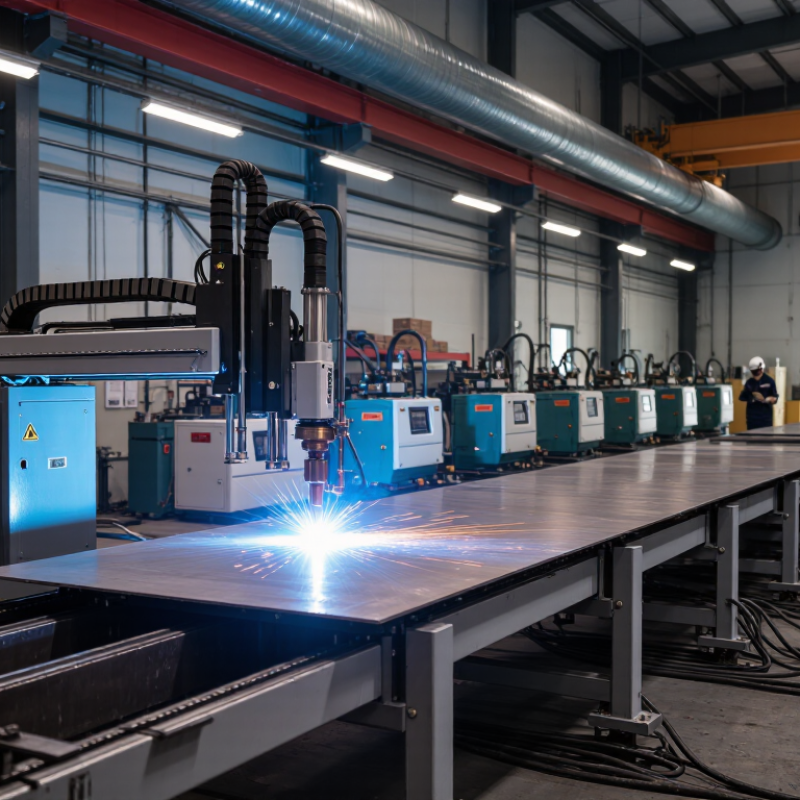
Mild Steel Welding Scope: 0.05–0.25% Carbon and Key Applications
Mild steel generally contains 0.05–0.25% carbon, offering a useful balance between strength, ductility, and weldability. Lower carbon content usually reduces hardening risk near the heat-affected zone. It also supports smoother cutting, bending, and forming. In practical shop work, clean edges and correct fit-up matter as much as chemical composition. Keep it clean. Oil, rust, and moisture can still cause porosity.
MIG, MAG, stick, and flux-cored processes commonly handle this steel range. Thin sheets may suit lower amperage and shorter arc lengths. Structural frames often need stronger joint preparation and controlled heat input. Typical applications include machinery guards, storage racks, agricultural parts, vehicle frames, and light building components. Ventilation remains essential during welding, especially in enclosed workshops. I have seen avoidable distortion caused by excessive heat, even when the weld looked visually acceptable.
Global buyers should ask suppliers for mill certificates, carbon-range data, welding procedure records, and inspection results. Sample testing can reveal inconsistent penetration, surface cracking, or dimensional movement. A capable supplier should explain filler selection, pre-cleaning, and post-weld checks in clear terms. Do not rely on price alone. One weakness is often overlooked: delivery packaging may protect steel poorly in humid routes. Buyers should also confirm traceability, batch identification, and realistic production capacity before placing repeated orders.
| Rank | Anonymized Supplier Profile | Typical Product Focus | Applicable Mild-Steel Carbon Scope | Common Welding Processes | Relevant International Standards | Typical Product Forms | Key Applications | Buyer-Relevant Strength |
|---|---|---|---|---|---|---|---|---|
| 1 | Supplier Profile A Large-scale consumables manufacturer with broad export capability |
Low-carbon steel electrodes, solid wires, flux-cored wires and submerged-arc consumables | 0.05–0.25% C | SMAW, GMAW, FCAW and SAW | AWS A5.1, AWS A5.18, AWS A5.20, AWS A5.17, ISO 2560-A and ISO 14341-A | Coils, spools, cut-length electrodes and bulk SAW wire | Structural steel, general fabrication, storage tanks, bridges and machinery frames | Wide product coverage and easier multi-process sourcing |
| 2 | Supplier Profile B Specialist in coated manual welding electrodes |
Rutile and basic low-hydrogen electrodes for mild and structural steels | 0.05–0.25% C | SMAW | AWS A5.1, ISO 2560-A and EN 757 classifications | Moisture-resistant cartons, vacuum packs and standard electrode boxes | Site repairs, steel erection, pipelines, agricultural equipment and maintenance work | Good fit for field welding and portable job sites |
| 3 | Supplier Profile C High-volume solid-wire supplier for automated fabrication |
Copper-coated and non-copper-coated solid GMAW wires | 0.05–0.25% C | GMAW and robotic welding | AWS A5.18, ISO 14341-A and ASME Section IX qualification practice | 15 kg spools, 250 kg drums and precision-layer-wound packages | Automotive components, appliances, light structures and steel furniture | Consistent wire feeding and suitability for high deposition rates |
| 4 | Supplier Profile D Flux-cored wire producer for outdoor and structural work |
Gas-shielded and self-shielded mild-steel FCAW wires | 0.05–0.25% C | FCAW-G and FCAW-S | AWS A5.20, AWS A5.36, ISO 17632-A and EN 17632-A | 15 kg spools, drums and bulk packages | Heavy structural steel, ship repair, construction equipment and outdoor erection | Higher deposition potential than many conventional SMAW applications |
| 5 | Supplier Profile E Submerged-arc consumables supplier for long weld seams |
Solid SAW wire with compatible fused or agglomerated flux | 0.05–0.25% C | SAW | AWS A5.17, AWS A5.23, ISO 14171-A and ISO 14174 | Bulk wire coils, drums and flux bags | Pressure vessels, wind-tower sections, beams, pipes and large fabricated structures | Efficient for long, continuous welds and high-production lines |
| 6 | Supplier Profile F General fabrication supplier serving distributors and OEMs |
Mixed portfolio of electrodes, solid wires and welding accessories | 0.05–0.25% C | SMAW, GMAW and FCAW | AWS A5.1, AWS A5.18, AWS A5.20 and ISO 2560-A | Retail cartons, industrial spools and distributor-ready packaging | Workshops, metal doors, trailers, farm machinery and general repairs | Flexible order quantities and broad everyday product availability |
| 7 | Supplier Profile G Low-hydrogen consumables specialist for safety-critical fabrication |
Basic-coated electrodes and low-hydrogen flux-cored products | 0.05–0.25% C | SMAW and FCAW-G | AWS A5.1, AWS A5.20, ISO 2560-A and ISO 17632-A | Hermetically sealed packs, heated-storage packs and industrial cartons | Load-bearing structures, cranes, heavy vehicles and repair of thick sections | Emphasis on hydrogen control, documentation and weld-procedure support |
| 8 | Supplier Profile H Regional export supplier focused on standard mild-steel grades |
Economical rutile electrodes and ER70-type solid welding wires | 0.05–0.25% C | SMAW and GMAW | AWS A5.1, AWS A5.18, ISO 2560-A and ISO 14341-A | Small cartons, spools and palletized export cases | Small fabrication shops, building hardware, gates, railings and repair work | Competitive standard-grade sourcing for price-sensitive buyers |
| 9 | Supplier Profile I Custom-packaging and private-label production service |
Standard mild-steel electrodes and wires supplied to importer specifications | 0.05–0.25% C | SMAW, GMAW and FCAW | AWS A5.1, AWS A5.18, AWS A5.20 and applicable ISO classifications | Custom cartons, neutral packaging, pallet loads and mixed containers | Distributor networks, hardware chains, maintenance contractors and OEM supply | Useful for customized packaging, labeling and mixed-SKU container orders |
| 10 | Supplier Profile J Small-batch technical supplier for project-based procurement |
Low-carbon steel electrodes, solid wires and project-specific consumables | 0.05–0.25% C | SMAW, GMAW, FCAW and limited SAW | AWS A5.1, AWS A5.18, AWS A5.20, ISO 2560-A and ISO 14341-A | Short production runs, spools, cartons and consolidated export shipments | Industrial maintenance, modular buildings, fabricated supports and repair projects | Suitable for moderate volumes and specification-driven purchasing |
Related Posts
-
10 Best Mild Welding Techniques for Beginners
-
How to Master Mild Welding Techniques for Beginners?
-
What is Mild Welding Techniques and Applications in Metalworking?
-
Mild Welding Techniques for International Buyers in China?
-
2026 Best Welding Machine Catalogue for Professional Use?
-
Top 10 Reasons to Choose Esab Indonesia for Welding Solutions?