Buying a giant welding machine is a serious investment, not a simple equipment purchase. These systems can support bridges, pressure vessels, heavy frames, and large industrial assemblies. Their size affects transport, installation, power supply, operator access, and long-term maintenance. A machine that fits the workshop floor may still exceed its electrical capacity. That detail is often missed.
This guide introduces 10 practical tips for evaluating Giant Welding equipment before signing a purchase agreement. It considers welding current, duty cycle, automation, compatible materials, control systems, spare parts, and supplier support. Real buying decisions should begin with the workpiece, not the machine’s impressive appearance. Measure the thickest sections, joint designs, production volume, and available workspace. Check the manufacturer’s technical documents carefully. Ask for test welds when quality is critical.
Performance numbers need context. A high amperage rating does not guarantee stable results across every process. Duty-cycle figures may change with ambient temperature, cable length, or operating conditions. A cheaper model can appear attractive. That judgment can be wrong. Installation costs, ventilation, cooling systems, training, and downtime may exceed the original savings. Experienced buyers inspect these hidden expenses before comparing prices.
The following tips are designed to support a more reliable evaluation. They do not replace advice from qualified engineers, certified technicians, or local safety professionals. Every project has different risks. A careful buyer leaves room for uncertainty, asks uncomfortable questions, and verifies claims through demonstrations and references. Bigger is not always better. The right machine is the one that delivers consistent weld quality, safe operation, practical service access, and measurable value over its working life.
Before buying a giant welding machine, define the work it must perform. Start with the metals, thicknesses, joint designs, and expected production volume. A machine for 40-millimeter structural steel needs different capacity than one for thin stainless panels.
Know the welding process. MIG, TIG, submerged arc, and stick welding each demand different controls and consumables. Also measure the workspace carefully. A large power source may fit the floor plan but leave too little room for cables, ventilation, and material movement.
I once underestimated cable distance on a heavy fabrication project. The machine worked, but setup became slow and awkward. Duty cycle matters. Calculate how long operators will weld during each hour, not just the maximum amperage shown on a specification sheet.
Check available electrical service, phase requirements, grounding, cooling, and maintenance access with a qualified welding engineer. Review procedure specifications and test the machine with your actual material before committing to a purchase. Real samples reveal arc stability, penetration, spatter, and operator fatigue. My early output estimates were too optimistic. Allow time for repositioning, preheating, inspection, and occasional troubleshooting. Small details become expensive when the machine is enormous.
Compare power, capacity, and welding performance before trusting a large nameplate. A 600-amp machine may deliver that output only briefly. Check its duty cycle at the rated temperature, then compare output voltage, amperage, and input kVA. Thermal stability matters. The IEA’s Energy Efficiency 2023 report estimates that industry uses about 37% of global final energy, making idle consumption and power-factor performance worth measuring. Ask for measured efficiency data, not vague sales language. Confirm the available phase, voltage, breaker capacity, and cable length at your workshop. A powerful machine can still underperform through voltage drop.
Capacity should match the workpiece, process, and production rhythm. For thick plate, verify continuous output, cooling design, torch compatibility, and electrode or wire range. For automated welding, inspect arc-start consistency, travel-speed control, waveform adjustment, and data logging. American Welding Society workforce research has projected a U.S. shortage of roughly 330,000 welding professionals by 2026, so simpler controls and repeatable settings may reduce training pressure. However, I would not assume automation fixes poor setup. Test the machine on representative steel, including a long weld beside a short repair. Watch bead width, spatter, penetration, and temperature rise. Request independent test records aligned with applicable welding standards. One overlooked detail is service access. Heavy equipment still needs filters, fans, connectors, and calibration checks. Bigger is not always better. It may simply consume more power and occupy valuable floor space.
10 Tips for Buying Giant Welding Machines
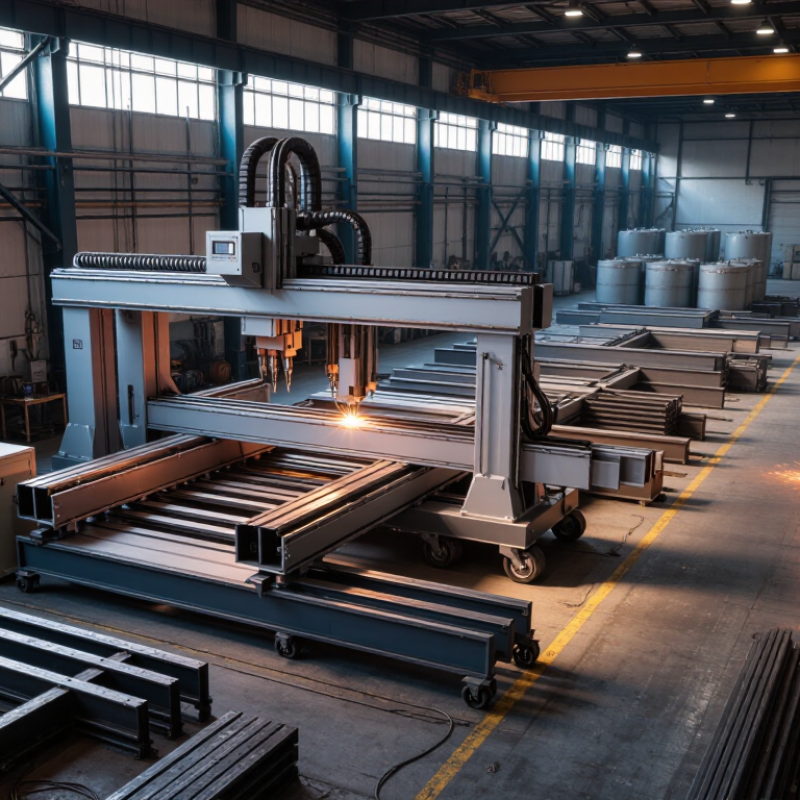
Check the machine’s construction before studying its impressive output numbers. A rigid steel frame reduces vibration during long welds. Inspect gantries, rails, lifting points, and cable supports for clean workmanship. Weld seams should look consistent, without sharp edges or visible cracks. Look underneath. Dust, oil, and trapped moisture often collect around poorly protected components. Confirm that service panels open easily and that replacement parts remain accessible.
Safety features deserve equal attention. Emergency-stop buttons should be reachable from the operator’s normal position. Guards must cover moving assemblies without blocking necessary visibility. Door interlocks should stop operation when an enclosure opens. Check grounding points, overload protection, cooling alarms, and fault indicators. Ask whether the machine records shutdown events. A quiet machine is not always a safe machine. During a site visit, test the emergency circuit instead of accepting a verbal explanation.
Control quality affects daily productivity more than many buyers expect. The interface should show current, voltage, travel speed, temperature, and active alarms clearly. Password levels can prevent accidental changes to qualified welding programs. Manual controls are still valuable when sensors need checking. Request a demonstration using material similar to your own work. Watch how quickly the system responds to a stop command. A polished screen can hide confusing menus, and this is an easy detail to overlook. Have an experienced technician review installation space, power requirements, ventilation, and operator training before purchase.
| No. | Buying Checkpoint | What to Inspect | Recommended Reference | Why It Matters | Buyer Action |
|---|---|---|---|---|---|
| 1 | Verify the Required Welding Capacity | Check rated output current, duty cycle, voltage range, welding process compatibility, and maximum material thickness. | Select a machine with sufficient output for the planned process and include a practical capacity margin rather than operating continuously at maximum output. | Undersized equipment can overheat, reduce productivity, and produce inconsistent welds. | Prepare a load list covering material type, thickness, electrode or wire size, production hours, and welding method. |
| 2 | Examine the Main Frame and Construction | Inspect frame rigidity, weld quality, enclosure thickness, lifting points, service panels, cable routing, and corrosion protection. | The base should remain stable under vibration and be suitable for the machine's total operating weight and working environment. | A rigid structure helps protect electrical components and reduces alignment, vibration, and maintenance problems. | Request construction drawings, total weight, footprint, center-of-gravity information, and lifting instructions. |
| 3 | Confirm Power Supply Compatibility | Review input voltage, phase configuration, frequency, maximum input current, power factor, and recommended upstream protection. | The electrical specifications must match the available plant supply and local installation requirements. | An incompatible supply may cause nuisance trips, overheating, poor arc performance, or unsafe installation conditions. | Have a qualified electrician verify supply capacity, disconnect requirements, grounding, and cable sizing before purchase. |
| 4 | Evaluate Thermal Management | Check cooling method, fan arrangement, air filters, ventilation clearance, thermal sensors, and over-temperature shutdown. | Airflow should be suitable for the duty cycle, ambient temperature, dust level, and installation space. | Effective cooling protects power electronics and supports stable output during extended welding periods. | Confirm required clearance around air inlets and outlets and include filter cleaning in the maintenance plan. |
| 5 | Check Safety Protection Systems | Look for grounding provisions, input overcurrent protection, thermal overload protection, emergency-stop compatibility, guarded terminals, and fault alarms. | Safety features should be documented and compatible with the site's risk assessment and electrical safety procedures. | Large welding systems can expose workers to electrical, thermal, mechanical, arc-flash, and fume-related hazards. | Request the risk assessment, wiring diagrams, safety instructions, and verification records for protective functions. |
| 6 | Review Control and Monitoring Features | Assess display readability, parameter adjustment, password access, weld-job storage, remote control options, alarms, and data logging. | Controls should allow repeatable adjustment of current, voltage, wire-feed speed, polarity, and process-specific settings where applicable. | Clear controls improve consistency, reduce setup errors, and make troubleshooting faster. | Test the interface with actual operators and confirm that stored programs can be protected from unauthorized changes. |
| 7 | Inspect Cable, Torch, and Grounding Connections | Check cable length and cross-section, connector ratings, torch compatibility, work-return connections, strain relief, and cable management. | All accessories should be rated for the intended current, duty cycle, process, and working distance. | Incorrect or damaged connections can create voltage drop, heat buildup, unstable arcs, and shock risks. | Include approved accessory specifications and replacement costs in the purchase evaluation. |
| 8 | Assess Automation and Integration Options | Check interfaces for positioners, manipulators, robotic cells, external feeders, interlocks, and production monitoring systems. | Communication and control interfaces should be clearly documented and compatible with the planned equipment. | Integration problems can delay commissioning and prevent the machine from achieving its expected productivity. | Obtain interface diagrams, signal lists, software requirements, and a written commissioning responsibility matrix. |
| 9 | Consider Installation, Access, and Mobility | Measure doorways, floor loading, aisle space, service access, anchoring points, ventilation space, and transportation routes. | The installation plan should account for the machine, power equipment, consumables, extraction, and operator access. | A machine that cannot be safely positioned or serviced may create costly facility modifications. | Complete a site survey and confirm delivery, rigging, anchoring, and commissioning requirements before placing the order. |
| 10 | Compare Reliability, Service, and Total Cost | Review warranty terms, spare-parts availability, preventive maintenance intervals, training, technical support, energy consumption, and expected downtime. | Evaluate the complete life-cycle cost rather than comparing purchase price alone. | Service delays, consumables, electricity, repairs, and lost production can exceed the initial price difference. | Request a five-year cost estimate, service response times, recommended spare-parts list, and operator training plan. |
Buying a giant welding machine requires more than checking output power and welding capacity. Installation can determine daily performance. Measure the workshop entrance, floor loading, ceiling clearance, and ventilation path before placing an order. A machine may fit on paper but fail through a narrow doorway. Confirm electrical requirements with a qualified technician. Check grounding, cable length, cooling water, and compressed air connections. These details prevent expensive delays.
Maintenance planning should begin during evaluation. Ask for service intervals, filter specifications, lubrication points, and recommended inspection records. Operators should easily reach control panels and removable covers. A sealed cabinet helps in dusty workshops, but it still needs inspection. I once underestimated cleaning time on heavy equipment. That mistake affected production more than expected. Keep spare consumables available, yet avoid storing unnecessary parts.
Warranty language deserves careful reading. Check coverage periods, exclusions, labor costs, transport responsibility, and response times. Some warranties cover components but not installation errors or harsh operating conditions. Request written procedures for fault reporting. Service support matters when a machine stops during a large fabrication project. Ask whether technicians can provide remote diagnosis, on-site repairs, and operator training. Verify parts availability in your region. A low purchase price is less attractive when one missing component causes weeks of downtime. Real support is measurable.
Buying a giant welding machine starts with the total cost, not the catalog price. Tip 1: Request a detailed quotation. Include freight, unloading, installation, commissioning, training, taxes, and spare parts. Tip 2: Measure your workshop before ordering. A large frame may require reinforced flooring, wider doors, and upgraded electrical capacity. Tip 3: Estimate power consumption using your real production schedule, not the machine’s maximum rating. Small errors become expensive over several years.
Tip 4: Calculate consumables, electrode waste, cooling fluids, and routine maintenance. Tip 5: Ask for expected service intervals and replacement-part prices in writing. Tip 6: Compare downtime risk. A cheaper machine can cost more if technicians wait weeks for support. My early estimates were too optimistic. I ignored crane rental and lost production during installation. That mistake changed my purchasing checklist. Tip 7: Request references from facilities with similar materials, thicknesses, and workloads. Their experience often reveals practical problems that brochures hide.
Tip 8: Check the supplier’s technical qualifications, inspection records, warranty terms, and response times. Tip 9: Ask for operator training and documented safety procedures. Reliable suppliers explain limitations instead of promising perfect results. Tip 10: Compare suppliers through a five-year ownership spreadsheet, including energy, labor, repairs, and downtime. Leave room for uncertainty. Metal prices, electricity rates, and production demands can change. A trial weld using your actual materials is valuable. So is a written service commitment. The best supplier may not offer the lowest quote. They should offer clear costs, traceable support, and evidence that the machine fits your workflow.
Five-year total cost comparison for three industrial welding machine classes. The planning model assumes 2,000 operating hours per year, electricity at $0.12 per kWh, routine maintenance, installation, and operator training.
Use total cost of ownership—not purchase price alone—to compare suppliers. A lower-cost machine may require more installation work, energy, downtime support, or maintenance over its service life. Actual quotations should verify power requirements, warranty coverage, spare-parts availability, delivery terms, and service response times.