How to Choose the Best Stick Welding Equipment for Your Needs?
When it comes to Stick Welding, choosing the right equipment can be daunting. Expert welder Jane Smith states, "The right tools make all the difference in achieving precision.” With a variety of options available, it’s essential to understand your specific needs. Stick Welding offers flexibility and ease, but the equipment must match your experience level.
First, consider the types of projects you will undertake. Are you working on thin materials or heavy steel? Each requires different welding machines and electrodes. Also, think about portability. Some welders need equipment they can easily move. It's crucial to assess your workspace and the locations of projects.
Additionally, take note of your budget. High-quality Stick Welding equipment can be expensive. However, investing in reliable tools can lead to better outcomes. Reflect on how much you're willing to spend on essential features versus what may be unnecessary. The decision should be based on careful evaluation, not just price tags.
Understanding Stick Welding: Basics and Applications
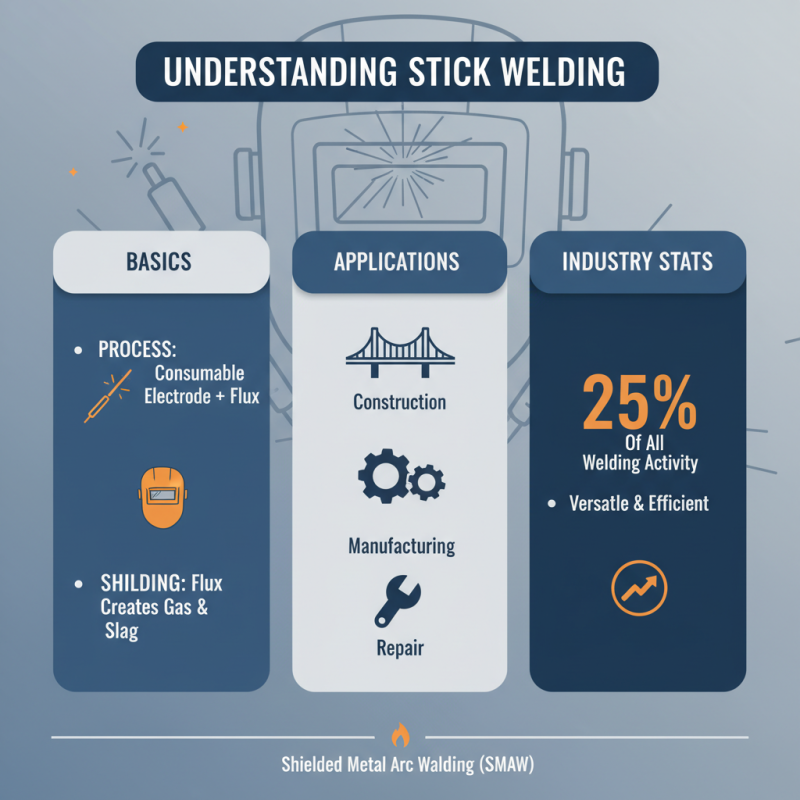
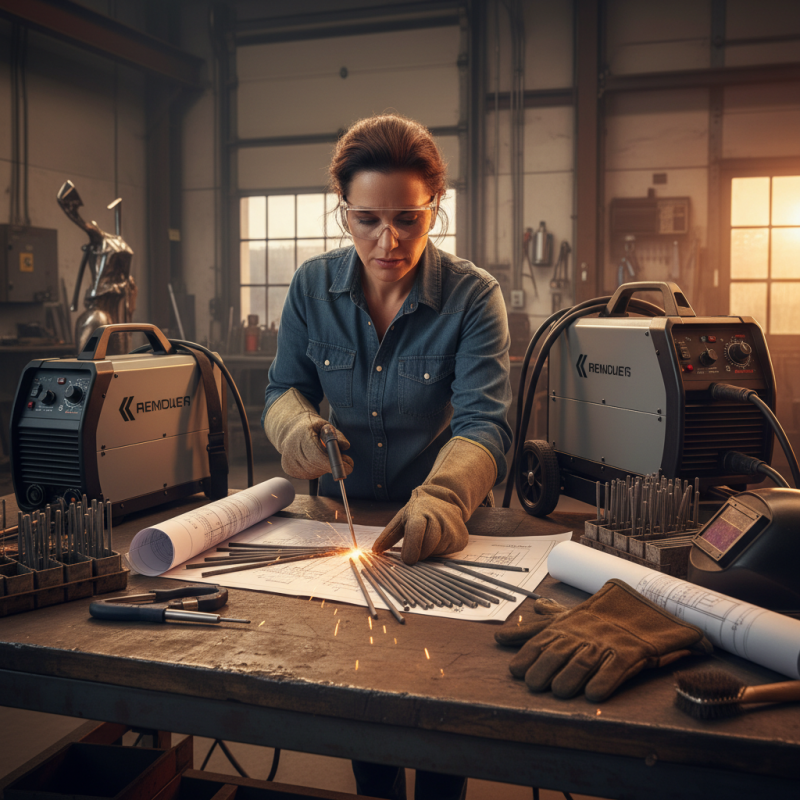
Stick welding, also known as Shielded Metal Arc Welding (SMAW), is a common and versatile welding method. It employs a consumable electrode coated in flux to produce a weld. This process is widely used in construction, manufacturing, and repair. According to industry reports, stick welding accounts for around 25% of all welding activity due to its efficiency and ease of use.
For those new to stick welding, understanding its applications is crucial. Stick welding works well on thick materials and in adverse conditions, such as windy or outdoor environments. However, it is less effective on thin metals and in confined spaces. The American Welding Society states that proper training and safety measures are vital. Many welders report challenges, such as poor penetration, when unfamiliar with different settings.
Tip: Always practice on scrap metal to refine your technique before starting a project. Pay attention to your arc length and travel speed; these factors greatly influence the weld quality.
As you explore stick welding, remember that choosing the right equipment is essential. The power source, electrode size, and welding position can significantly impact the effectiveness of your work. Ensure your setup matches the requirements of the materials you are working with.
Key Factors to Consider When Selecting Stick Welding Equipment
Choosing stick welding equipment requires careful consideration of several key factors. One important aspect is the welding current. Different materials and thicknesses require distinct amperage levels. Ensure the equipment can easily adjust to those needs. Portability is also crucial, especially if you plan to weld in various locations. A lighter, more compact machine can enhance your workflow in such situations.
Another factor is the duty cycle. This rating indicates how long you can weld before the machine needs to cool down. A higher duty cycle is essential for extensive projects. If you're new, take time to learn about duty cycles. It can help prevent overheating and equipment failure.
Tips: Always evaluate your specific needs before making a purchase. For hobbyists, simplicity might be key. Professionals could require more advanced features. Don’t rush into a decision based on price alone. Research and know the basics of welding to make an informed choice. Remember, the right equipment can make a significant difference in your welding experience.
Comparison of Key Features in Stick Welding Equipment
Types of Stick Welding Machines and Their Features
When selecting a stick welding machine, understanding the different types is crucial. The most common type is the transformer welder. It uses magnetic fields to convert electrical energy. These machines are reliable and suitable for various tasks. However, they can be heavy and less portable.
Inverter welders are another option. They are lighter and more efficient than traditional transformers. Inverters can adjust power settings easily, allowing for more versatility. Nonetheless, they can be more expensive and require careful handling. Operators must be aware of their sensitivity to temperature changes.
Lastly, there are multi-process welders. These machines can perform stick welding, MIG, and TIG processes. This flexibility can be beneficial for those tackling diverse projects. But with complexity comes a learning curve. Users often face challenges when switching between functions. Understanding the specifics of each type can enhance your welding experience.
Essential Accessories for Stick Welding Success
When it comes to stick welding, having the right accessories can make a significant difference in your success. One essential accessory is a high-quality welding helmet. Look for one that provides excellent visibility and adequate protection. A good helmet should be comfortable for long sessions and allow you to work without straining your neck.
Another vital accessory is a welding glove. Choose gloves that offer both protection from heat and flexibility for movement. This ensures you can work efficiently without compromising safety. Additionally, a reliable grounding clamp is crucial. A poor connection can lead to welding defects, resulting in frustration and wasted materials.
Tips: Always check that your gear fits well. An ill-fitted helmet or gloves can hinder your performance. Invest time in selecting the right equipment; it pays off in the long run. Lastly, do not overlook cleaning supplies. A clean workspace is essential for quality welds. Make sure to regularly maintain your tools and keep them in top condition.
Maintenance Tips for Prolonging the Life of Welding Equipment
Maintaining your stick welding equipment is crucial for
efficiency and performance. Regular cleaning is essential. After each use, ensure you remove slag and debris.
A clean electrode holder helps with better conductivity. Inspect your cables for any wear or damage.
Worn cables can lead to poor performance and unsafe working conditions.
Checking the cooling system is another
important step. Overheating can shorten the lifespan of your equipment. Make sure fans and vents are
free from dust and obstructions. Additionally, check the power supply connections. Loose connections can
cause inconsistent welding results.
Lastly, invest in proper storage. Keeping your
welding equipment in a dry, dust-free environment can prevent rust and corrosion. Using protective cases
or covers can also help. If equipment shows signs of wear, don’t ignore it. Delaying repair may worsen
the situation. Regular maintenance not only prolongs the life of your tools but also ensures safer
welding practices.