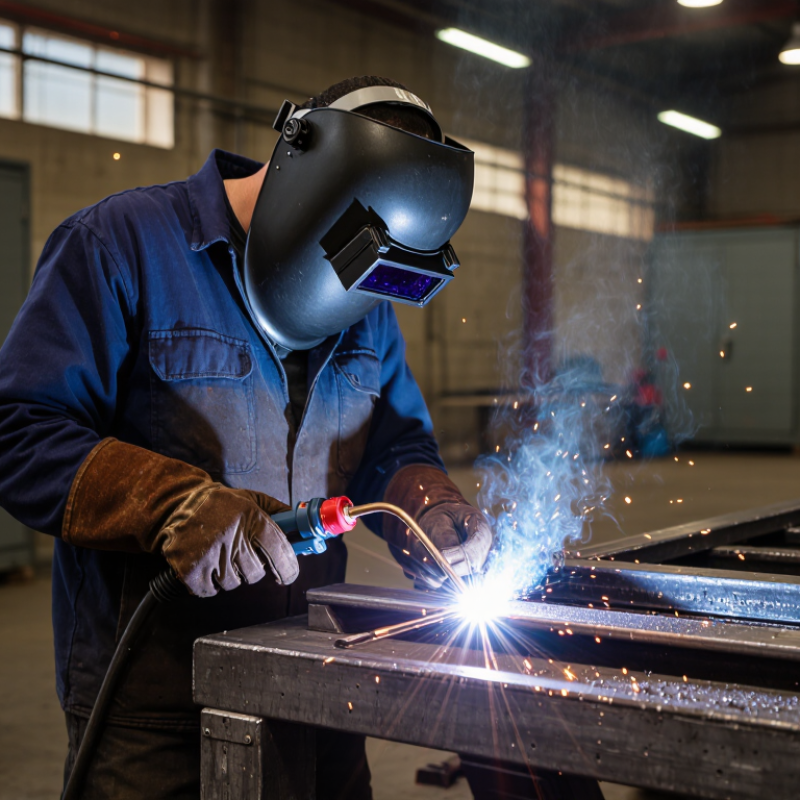
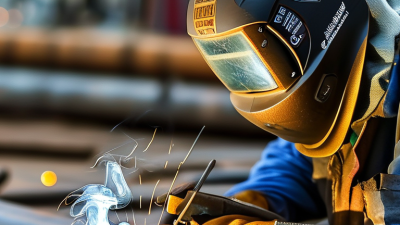
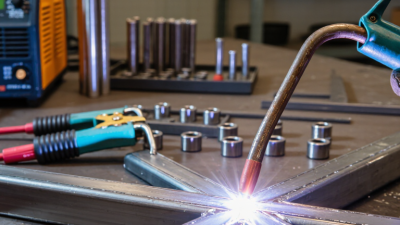
Stick Welding is one of the oldest and most practical arc-welding methods still used today. It joins metal by creating an electric arc between a coated electrode and the workpiece. The intense heat melts both surfaces, forming a small pool of liquid metal. As the electrode moves, this pool cools into a solid weld bead.
The equipment is simple: a power source, electrode holder, work clamp, cables, and suitable electrodes. The coating around the rod produces shielding gas and slag during welding. These layers protect the molten weld from atmospheric contamination. A welder must control arc length, travel speed, and electrode angle with steady hand movement. Small changes can create visible differences, including undercutting, porosity, or uneven penetration.
It works in demanding places.
From repair shops to outdoor construction, Stick Welding performs well where wind can disturb gas shielding. It can weld carbon steel, stainless steel, and some low-alloy materials when the correct electrode is selected. However, the process is not effortless. Slag removal takes time, and beginners often struggle to maintain a stable arc. I have found that clean metal, proper grounding, and patient practice matter more than rushing through a bead.
This guide explains how Stick Welding works, why electrode choice matters, and what affects weld quality. It also considers safety, because sparks, ultraviolet radiation, fumes, and hot metal require serious protection. Some explanations may seem basic, but basic habits are often where reliable welding begins.
What Is Stick Welding and How Does It Work?
What Stick Welding Is and the Principles Behind It
Stick welding, formally called Shielded Metal Arc Welding, joins metal through an electric arc. The arc forms between a coated electrode and the workpiece. It creates intense heat that melts both surfaces and produces a shared weld pool.
The electrode contains a metal core and a flux coating. As the coating burns, it releases shielding gases around the pool. This barrier limits contact with oxygen and nitrogen, which can weaken the joint. The coating also forms slag over the cooling weld. Slag matters.
A welder controls arc length, travel speed, and electrode angle by hand. A short, steady arc usually reduces spatter and improves penetration. Moving too slowly can create a bulky bead, while moving too quickly may leave weak fusion. These errors are easy to make, even with sound equipment and preparation.
Stick welding works well outdoors because it does not depend on an external gas cylinder. Wind can still disturb the shielding effect, however. Clean metal, correct current, dry electrodes, and suitable protective clothing remain essential. A face shield, gloves, flame-resistant clothing, and adequate ventilation protect against arc radiation, heat, fumes, and flying slag. The process looks simple, but reliable results require practice, inspection, and honest attention to imperfect welds.
Stick welding, formally shielded metal arc welding, uses an electric arc between a coated electrode and the workpiece. The arc melts both surfaces. Electrode flux forms shielding gas and slag around the weld pool. The essential power source must provide constant current, because arc length changes during hand movement. A complete setup includes welding leads, an electrode holder, a ground clamp, and suitable electrodes. Keep connections tight and dry.
Protective equipment is equally important. Use a properly shaded helmet, flame-resistant clothing, insulated gloves, safety boots, and hearing protection. Local exhaust ventilation helps control welding fumes, while a respirator may require professional assessment. A wire brush and chipping hammer remove slag between passes. Small tools matter. A dirty joint can ruin good technique.
Electrode choice depends on base-metal type, thickness, welding position, and required strength. Store low-hydrogen electrodes in controlled conditions; moisture can increase cracking risk. The American Welding Society’s 2023 workforce report estimates that the United States may need 330,000 new welding professionals by 2029. That demand makes disciplined equipment selection more valuable, not less. I would still inspect every cable before striking an arc. Experienced welders sometimes overlook simple damage. A 2024 industrial safety review also links poor fume control with increased respiratory exposure, so ventilation should never be treated as optional. Stick welding looks rugged, but preparation remains its quiet test.
| Category | Equipment or Material | Typical Data | Function in Stick Welding | Selection and Use Guidance |
|---|---|---|---|---|
| Process | Shielded Metal Arc Welding (SMAW) | Manual arc-welding process using a flux-coated, consumable electrode | An electric arc melts the electrode and base metal to form a weld pool. The flux creates shielding gas and a protective slag covering. | Suitable for outdoor work, maintenance, construction, repair, and applications where portability is important. |
| Power Source | Stick welding power supply | Constant-current output; commonly about 20–250 A for general-purpose machines | Maintains a relatively stable welding current while the arc length changes during manual welding. | Choose a machine with the required current range, electrode polarity options, input voltage, and duty cycle. |
| Electrical Output | Open-circuit voltage | Often approximately 50–80 V, depending on power-source design | Provides the voltage needed to initiate and maintain the arc before the arc voltage drops during welding. | Follow the machine’s electrical ratings and use proper grounding, dry connections, and insulated leads. |
| Current Type | AC or DC welding current | Common settings include DCEP, DCEN, or AC | Polarity influences arc behavior, penetration, bead profile, and electrode compatibility. | Use the polarity recommended for the selected electrode classification. DCEP means electrode positive; DCEN means electrode negative. |
| Electrode | E6010 cellulose electrode | Typical diameters: 2.5, 3.2, and 4.0 mm; often used with DCEP | Produces a forceful, penetrating arc and a fast-freezing weld pool. | Commonly used for root passes and pipe work. It generally requires a power source capable of maintaining a suitable arc characteristic. |
| Electrode | E6011 general-purpose electrode | Typical diameters: 2.5, 3.2, and 4.0 mm; usable with AC and commonly DC | Provides good penetration and can tolerate some surface contamination better than low-hydrogen electrodes. | Useful for repair and maintenance work, especially where AC power is available. Clean the joint whenever possible. |
| Electrode | E6013 rutile electrode | Typical diameters: 2.5, 3.2, and 4.0 mm; commonly available for AC or DC | Produces a smooth arc, moderate penetration, and an easily removable slag. | Often selected for mild-steel fabrication, sheet metal, and general-purpose welding where appearance and ease of use are important. |
| Electrode | E7018 low-hydrogen electrode | Typical diameters: 2.5, 3.2, and 4.0 mm; commonly used with DCEP or AC-rated equipment | Provides approximately 70 ksi minimum tensile strength and low-hydrogen weld metal when properly stored and used. | Recommended for structural and restrained joints when specified. Keep electrodes dry and follow the applicable welding procedure. |
| Current Setting | Electrode diameter and amperage |
2.5 mm: approximately 40–90 A 3.2 mm: approximately 70–130 A 4.0 mm: approximately 100–180 A |
Controls arc heat, penetration, deposition rate, and weld-pool fluidity. | These are broad starting ranges. Use the electrode manufacturer’s range and adjust for position, joint fit-up, and material thickness. |
| Workpiece | Carbon-steel base metal | Commonly welded with E6010, E6011, E6013, or E7018 electrodes | Provides the material that is melted and fused with the electrode to create the joint. | Remove excessive rust, paint, oil, moisture, and scale. Verify the material grade and preheat requirements when applicable. |
| Circuit Connection | Work clamp and work lead | Clamped directly to clean, electrically conductive base metal | Completes the welding circuit and carries current back to the power source. | Place the clamp close to the joint when practical. Do not use loose, painted, rusty, or overheated connections. |
| Electrode Holder | Insulated electrode holder | Designed for the machine’s maximum welding current and duty cycle | Holds the electrode at the required angle while keeping the operator electrically insulated. | Inspect the jaws, insulation, and cable connection. Replace damaged components before welding. |
| Welding Leads | Electrode cable and work cable | Flexible, insulated cables sized for current, length, and duty cycle | Carry welding current between the power source, electrode holder, and work clamp. | Keep cables dry and free from cuts, crushed sections, hot surfaces, and unnecessary coils that can increase heating. |
| Slag Removal | Chipping hammer and wire brush | Used after the weld bead has cooled enough for safe cleaning | Removes solidified flux slag and surface residue between passes. | Chip away from the body and wear eye protection. Remove all relevant slag before depositing the next pass. |
| Electrode Storage | Dry storage container or electrode oven | Low-hydrogen electrodes are often held around 120–150°C after opening, subject to the applicable specification | Limits moisture absorption that can increase diffusible hydrogen and raise cracking risk. | Follow the electrode classification and written storage instructions. Do not use damp, damaged, or contaminated electrodes for critical work. |
| Joint Preparation | Steel brush, grinder, file, or solvent-free cleaning method | Clean bright metal is preferred at the arc and joint surfaces | Improves arc stability, reduces porosity, and helps achieve consistent fusion. | Remove oil and grease safely before grinding or welding. Provide ventilation when cleaning or welding coated materials. |
| Personal Protection | Welding helmet with appropriate filter shade | Common shade range: approximately shade 10–14, selected according to welding current and applicable safety guidance | Protects the eyes and face from ultraviolet radiation, infrared radiation, spatter, and intense visible light. | Use the correct shade for the current and process. Inspect the lens, cover plate, headgear, and auto-darkening function before use. |
| Personal Protection | Flame-resistant clothing, gloves, boots, and hearing protection | Leather gloves and nonflammable protective clothing are commonly used | Reduces exposure to sparks, molten metal, arc radiation, heat, noise, and sharp edges. | Keep clothing dry and free of flammable contaminants. Cover exposed skin and use suitable respiratory protection when required by the hazard assessment. |
| Ventilation | Local exhaust or adequate natural ventilation | Required according to the materials, coatings, workspace, and applicable regulations | Controls welding fumes and gases generated by the arc, flux, base metal, and surface coatings. | Never weld galvanized, painted, or coated materials without evaluating the coating hazards and providing appropriate controls. |
| Welding Technique | Arc length and travel speed | Arc length is generally kept close to the electrode’s core-wire diameter | Controls bead width, penetration, spatter, slag coverage, and porosity. | Maintain a steady travel speed and consistent angle. Excessive arc length can increase spatter and atmospheric contamination. |
| Work Position | Flat, horizontal, vertical, or overhead position | Position affects current, electrode type, puddle control, and deposition rate | Determines how gravity influences the molten weld pool and slag. | Use an electrode approved for the intended position and reduce current when necessary for vertical or overhead welding. |
| Quality Control | Visual inspection and weld cleaning | Check bead profile, fusion, undercut, cracks, porosity, overlap, and slag inclusions | Confirms whether the weld surface and visible workmanship meet the applicable acceptance criteria. | For safety-critical joints, use the required procedure qualification and nondestructive testing method in accordance with the governing code. |

Stick welding uses an electric arc to join metal with a flux-coated electrode. The electrode carries current from the power source to the workpiece. A ground clamp completes the circuit. The process begins when the welder briefly touches the electrode against clean steel. This contact creates a short circuit and starts heat.
The welder then lifts the electrode slightly, usually only a few millimeters. The narrow air gap becomes ionized, allowing current to continue flowing as a bright arc. The arc produces intense heat, melting the electrode tip and the base metal. A small molten pool forms under the arc. The electrode coating burns and releases shielding gases, while its remaining material becomes slag. This layer protects the cooling weld from air contamination.
Arc control requires steady hands and constant observation. The gap must remain consistent. Too close. The electrode may stick. Too far, and the arc can become unstable. A controlled travel angle helps shape the bead and distribute heat evenly. Moving too quickly creates a thin, weak-looking weld. Moving too slowly may cause excessive buildup or burn-through. In practice, adjusting speed by watching the pool works better than following one rigid rule. Surface rust, poor grounding, and damp electrodes can also cause porosity or interruptions. Even experienced welders sometimes produce uneven beads, so inspecting the finished joint remains essential.
Stick welding, or shielded metal arc welding, creates an arc between a flux-coated electrode and the workpiece. The electrode melts into the joint. Its flux forms shielding gas and slag, protecting the pool from atmospheric contamination. AWS A5.1/A5.1M classifies electrodes by tensile strength, welding position, coating, and current type. That classification is practical, not decorative.
For clean carbon steel, an E6010 or E6011 electrode offers strong arc penetration and suits repair work. E6013 usually produces a smoother arc on thinner, cleaner material. E7018 provides stronger, lower-hydrogen welds, but it must stay dry. Moisture matters. The AWS Welding Workforce Data report projects a need for 330,000 new welding professionals by 2026, increasing the value of disciplined electrode handling and repeatable training.
Set amperage from the electrode diameter, then adjust for position, joint fit-up, and actual arc behavior. A 3.2-millimeter electrode commonly needs roughly 90–130 amperes, but the manufacturer’s specification remains controlling. Keep the arc short, especially with E7018. Excessive length increases spatter and porosity. Travel too slowly, and the bead becomes wide and overheated. Travel too quickly, and fusion may suffer. I sometimes prefer a slightly slower speed on a cold plate, though that judgment can be wrong without a test coupon. Remove slag between passes, inspect the toes, and record current, polarity, and visible defects. OSHA’s welding safety guidance also emphasizes ventilation and protection from welding fumes, which should be treated as process conditions, not optional housekeeping.
Stick welding, or shielded metal arc welding, uses a flux-coated electrode to create an electric arc. The arc melts the electrode and base metal, forming a joint as the weld pool cools. Flux produces shielding gas and a protective slag layer. The operator removes this slag between passes with a chipping tool and wire brush.
Common techniques include short arc welding, steady stringer beads, and controlled weaving. A short arc usually reduces spatter and improves control. Keep the electrode angle consistent, often near 10 to 15 degrees in the travel direction. For vertical joints, many welders move upward with small side-to-side pauses. This helps support the molten metal. I have seen beginners travel too quickly, leaving a narrow, weak bead. Slowing down helps, but excessive weaving can trap slag. That detail is easy to miss.
Stick welding suits outdoor repairs, heavy steel, farm equipment, pipelines, and construction work. It tolerates some surface contamination better than several other processes, but clean metal still produces better results. Wear a properly rated helmet, flame-resistant clothing, leather gloves, and covered boots. Use ventilation, especially in enclosed spaces. Inspect the electrode holder, cables, and ground connection before striking an arc. Keep paper, fuel, and other combustibles away from sparks. Mark hot metal clearly. A fire watch may be necessary after welding ends. Never weld a sealed container, even if it appears empty. Pause when visibility, breathing, or concentration becomes poor. Safety is not automatic.