2026 Top Core Welding Wire Types for Global Buyers?
Global buyers entering the 2026 welding market need more than a long supplier list. They need a clear view of Core Welding Wire types, performance limits, and purchasing risks. Flux-cored wires, metal-cored wires, gas-shielded products, and self-shielded options behave differently in real workshops. Their results depend on steel grade, joint design, welding position, shielding gas, and operator skill.
Professor Sindo Kou, author of Welding Metallurgy, describes welding simply: “Welding is a process of joining materials.” That short statement remains important. The wire is not an isolated product. It becomes part of a complete system involving heat input, arc stability, penetration, slag removal, and weld-metal chemistry. Buyers should compare AWS classifications, ISO references, tensile strength, impact performance, deposition rate, and required shielding conditions. Certificates matter. So does traceability.
This guide examines the Core Welding Wire types most relevant to international buyers in 2026. It considers construction steel, shipbuilding, heavy equipment, pipelines, repair work, and automated production. Practical details will receive attention, including spool size, storage humidity, feeding performance, and visible slag behavior. A wire that performs well on a clean indoor joint may struggle on painted or lightly contaminated steel. That is easy to overlook.
Not every supplier comparison will be perfect. Product data can be incomplete. Regional terminology can also create confusion. Buyers should confirm technical documents, test sample welds, and review local project requirements before placing large orders. Cost still matters, but unstable feeding or excessive rework can quietly erase a low purchase price.
Welding Wire Classification and Core Design Basics
2026 Top Core Welding Wire Types for Global Buyers
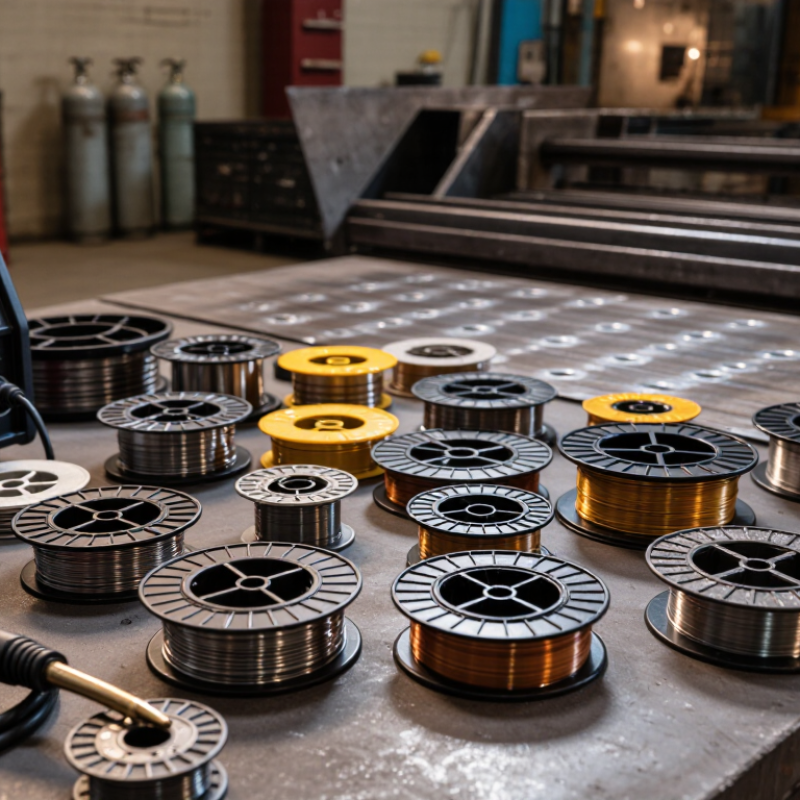
Welding wire classification starts with process, shielding, and core design. ISO 4063 identifies solid-wire GMAW as process 131, gas-shielded flux-cored welding as 136, and metal-cored welding as 138. These codes reduce confusion across international purchasing teams.
Solid wires contain no flux core. They offer clean arcs and low slag.
Flux-cored wires use mineral, alloy, and gas-forming ingredients inside the tube.
Rutile cores often support smooth transfer and easier slag removal.
Basic cores can improve toughness, but they demand tighter moisture control.
Metal-cored wires contain mainly metallic powders. They can increase deposition efficiency and reduce spatter in suitable applications.
Scale still matters. World Steel Association reported 1,882.6 million tonnes of global crude steel production in 2024. That volume keeps wire selection relevant for fabrication, repair, infrastructure, and heavy equipment.
However, steel output does not directly equal welding-wire demand. That assumption is too simple. Joint position, plate thickness, productivity targets, and operator skill often matter more than tonnage.
Tips: Match the wire classification to the base metal and welding position. Check tensile strength, impact requirements, and shielding gas. Ask for batch certificates and moisture-control records. Test actual welds before volume purchasing. A wire that performs well in a workshop may behave differently on a windy site. Core design is practical engineering, not just a label.
Metal-Cored Welding Wire Options for High-Productivity Welding
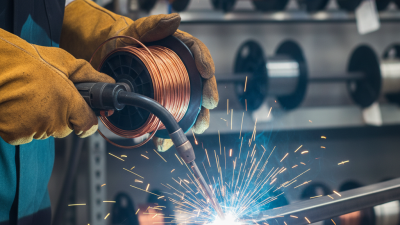
In 2026, metal-cored welding wire remains a strong option for high-productivity fabrication. Its tubular design carries alloying elements and metal powder. This structure supports higher deposition rates than many solid wires. It can also produce a broad, stable arc with less spatter. Welders often notice smoother starts and easier bead placement. That matters on long seams, such as structural frames, trailers, and heavy equipment.
Gas-shielded metal-cored wire suits workshops with controlled conditions and reliable shielding gas. Common choices include carbon steel, low-alloy steel, and stainless steel formulations. Buyers should match wire chemistry with the base metal and required mechanical properties. Wire diameter also affects current range, penetration, and deposition speed. A 1.2 mm wire may fit general production, while larger sizes support heavier applications. Always confirm the procedure qualification requirements.
Productivity is not only about kilograms deposited per hour. Reduced cleanup, fewer arc stops, and consistent bead profiles can lower real labor costs. Yet metal-cored wire is not a universal answer. Wind can disturb shielding gas. Poor grounding can weaken arc stability. Incorrect voltage may create excessive convexity or undercut. That assumption can fail. Experienced teams should test the wire on actual plate thicknesses, joint designs, and travel speeds. They should record weld appearance, slag behavior, gas flow, and operator feedback. Independent inspection and traceable batch records add confidence for global purchasing decisions.
2026 Top Core Welding Wire Types for Global Buyers
Metal-Cored Welding Wire Options for High-Productivity Welding
Typical industrial deposition-rate ranges are shown in kilograms per hour. Metal-cored GMAW wire generally provides higher deposition productivity than solid GMAW wire while supporting good arc stability and lower spatter in suitable applications. Submerged arc welding can achieve the highest deposition rates, but it requires specialized equipment and joint configurations. Actual performance varies with wire diameter, welding current, travel speed, shielding gas, position, and material thickness.
Key Performance Factors for Comparing Core Welding Wires
2026 Top Core Welding Wire Types for Global Buyers
Key Performance Factors for Comparing Core Welding Wires
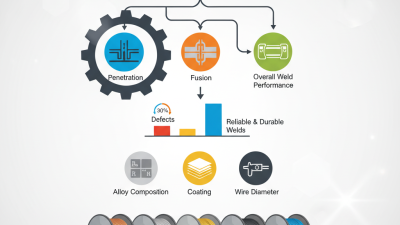
Choosing cored welding wire should begin with the joint, not the product label. Gas-shielded flux-cored wire often offers strong deposition rates and clean, productive welding. Self-shielded wire can perform better outdoors, where wind may disturb shielding gas. Metal-cored wire usually supports smooth arcs, low spatter, and high travel speeds. However, these benefits depend on position, plate thickness, and operator skill.
In production trials, compare penetration, arc stability, slag removal, and bead appearance. Also measure deposition efficiency, wire consumption, and post-weld cleaning time. A bright bead is not enough. Hidden porosity or incomplete fusion may appear after inspection. Check tensile strength, impact performance, diffusible hydrogen, and applicable welding classifications. Shielding gas flow and polarity must match the wire’s technical data. Storage matters too, especially in humid workshops. Small moisture exposure can affect weld quality.
Tips:
Run the same joint with each candidate wire. Record amperage, voltage, travel speed, gas flow, and visible spatter. Inspect cross-sections when possible. Ask for batch certificates and test reports, not only sales claims. A wire that performs well in one workshop may disappoint elsewhere. I have seen operators blame the wire when poor grounding caused unstable arcs. Still, product selection should be questioned when repeated tests show inconsistent feeding or slag release.
Global Buyer Criteria for Selecting 2026 Welding Wire Types
Global buyers choosing 2026 welding wire types should begin with the joint, not the catalog. Base metal, thickness, position, and required tensile strength narrow the selection quickly. Solid wire suits clean steel and controlled workshop conditions. Gas-shielded flux-cored wire supports higher deposition rates and tolerates some surface contamination. Self-shielded flux-cored wire can help outdoors, where wind disrupts shielding gas. Aluminum and stainless applications require compatible alloy chemistry and careful feeding equipment.
Real purchasing decisions also depend on diameter, shielding gas, polarity, and welding position. A 1.2 mm wire may improve productivity, but it can create excessive heat on thin plate. Ask for chemical composition, mechanical test results, dimensional tolerances, and batch traceability. Certificates should match the destination market and the project specification. Packaging matters too. Vacuum-sealed spools protect moisture-sensitive wires during long sea transport. Check storage instructions before placing large orders.
Supply reliability deserves equal attention. Buyers should examine production capacity, lead times, spare spool availability, and inspection procedures. Request sample testing with the actual machine, gas mixture, and base metal. A wire performing well in a laboratory may behave differently beside a windy fabrication yard. Price is useful, but it can hide higher rework costs. I have seen teams focus on deposition rate and overlook slag removal time. That mistake remains expensive. Perfect selection is unlikely; documented trials and honest review reduce the risk.