
- [email protected]
- Mon - Sat at 7:00AM to 9:00AM

How to Choose Mild Welding Steel for Global Buyers?
Choosing mild steel for welding is not simply a price comparison. Global buyers must assess carbon content, plate thickness, coating condition, delivery standards, and intended service. The right Mild Welding grade should produce stable arcs, clean fusion, and limited distortion. It should also match the buyer’s welding procedure and inspection requirements.
The World Steel Association reported approximately 1.882 billion tonnes of crude steel production in 2023. This scale shows the market’s strength, but it also reveals a problem: quality can vary greatly between suppliers. The same nominal grade may behave differently because of chemistry, rolling practice, surface condition, or storage. John C. Lippold, a widely recognized welding metallurgy expert, states, “Weldability is not an inherent material property; it depends on the process and service conditions.” Buyers should treat this as practical guidance, not theory.
Request a mill test certificate before approval. Check carbon equivalent, yield strength, tensile strength, impact performance, and heat number traceability. ISO 15614-1, AWS D1.1, and EN 10025 may apply, depending on the project and market. The World Steel Association also notes that steel production contributes roughly 7% to 9% of global energy-related carbon dioxide emissions, making efficient material use increasingly important.
A low-cost plate may become expensive after rework, cracking, or delayed delivery. That risk is easy to underestimate. Mild Welding selection should therefore combine laboratory data, supplier history, sample testing, and field experience. No grade is perfect for every climate, structure, or welding process. Careful buyers leave room for verification.
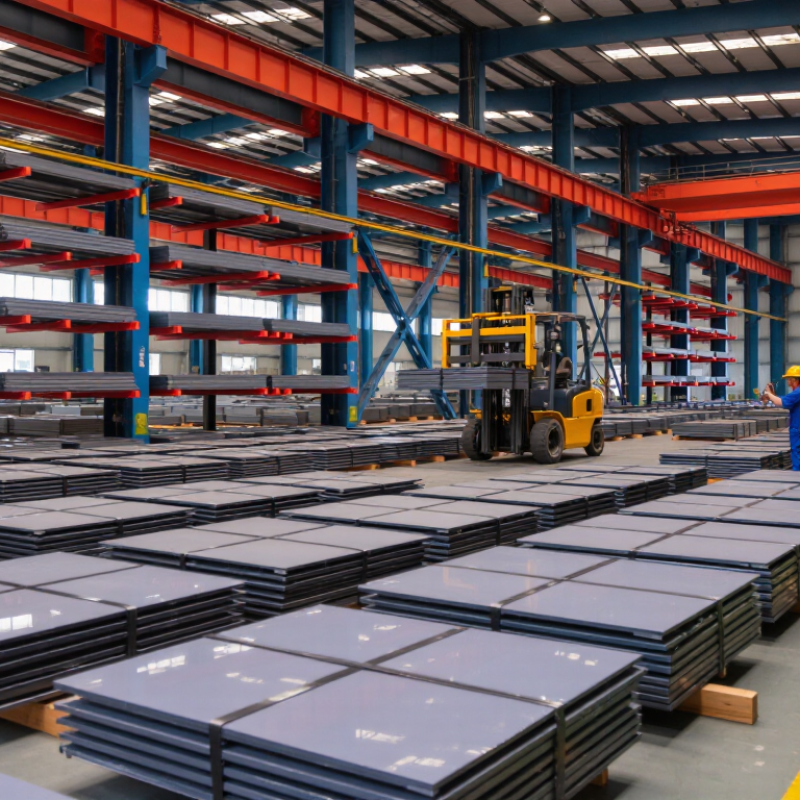
Understanding Mild Welding Steel Grades and Their Applications
How to Choose Mild Welding Steel for Global Buyers?
Understanding Mild Welding Steel Grades and Their Applications
Mild welding steel usually contains low carbon, making it easier to cut, form, and weld. Common grades include ASTM A36, EN S235JR, and JIS SS400. These designations are not automatically interchangeable. Their yield strength, testing rules, and chemical limits may differ.
A practical buyer should match the grade with the structure’s load, thickness, and service environment. ASTM A36 often suits frames, brackets, platforms, and general fabrication. S235JR is widely used for structural sections and fabricated supports. SS400 can serve similar workshop applications, but the required properties must be checked against the drawing. A grade chart alone is not enough.
Weldability depends on more than carbon content. Review the carbon equivalent, plate thickness, joint design, and welding process. Thicker sections may need controlled heat input or preheating. Fit-up matters. Poor edge alignment can create stress, even with suitable steel. Ask for a mill test certificate showing chemistry, tensile strength, yield strength, and impact results where required. Also confirm the standard edition and inspection level.
In global sourcing, language can create mistakes. “Mild steel” may describe a family, not one exact grade. Confirm dimensions, surface condition, tolerance, and delivery condition in writing. I would not select a cheaper grade without checking the engineering specification. That shortcut can fail quietly during fabrication. Temperature, humidity, and transport protection also deserve attention, especially for bare plates shipped across long distances.
How to Choose Mild Welding Steel for Global Buyers? — Understanding Mild Welding Steel Grades and Their Applications
| Grade and Standard | Typical Minimum Yield Strength | Common Applications | Welding and Selection Notes | Buyer Checks |
|---|---|---|---|---|
| ASTM A36 United States |
Typically 250 MPa (36 ksi); requirements can vary by product form and thickness. | Structural frames, base plates, brackets, general fabrication, and construction components. | Commonly welded with suitable mild-steel processes and consumables. Select the filler metal and procedure for the joint, thickness, and service conditions. | Confirm the ASTM specification, product form, dimensions, test documentation, and applicable project requirements. |
| S235JR EN 10025-2 |
235 MPa for nominal thickness up to 16 mm; minimum values decrease as thickness increases. | Light structural work, frames, supports, brackets, and general-purpose welded fabrications. | Often suitable for conventional fusion welding when the material condition and welding procedure are appropriate. | Check thickness-related strength requirements, the JR impact designation, delivery condition, and inspection documents. |
| S275JR EN 10025-2 |
275 MPa for nominal thickness up to 16 mm; minimum values decrease as thickness increases. | Structural components requiring greater strength than S235, including building frames and equipment supports. | Use a qualified procedure where required. Consider joint restraint, plate thickness, hydrogen control, and preheat requirements. | Verify the thickness range, impact requirements, product form, and project-specific welding standard. |
| S355JR EN 10025-2 |
355 MPa for nominal thickness up to 16 mm; minimum values decrease as thickness increases. | Load-bearing structures, machinery frames, transport structures, and heavier welded fabrications. | Weldability depends on thickness, carbon equivalent, restraint, and heat input. Follow the applicable welding procedure rather than assuming all sections need the same treatment. | Review the material certificate, thickness-dependent properties, impact designation, and welding procedure requirements. |
| SS400 JIS G 3101 |
Minimum yield strength depends on thickness; common published requirements include 245 MPa for thinner products. | General structural use, machinery parts, frames, and welded components where the specified properties are suitable. | Confirm the exact product specification and chemistry before selecting welding parameters or consumables. | Check the JIS edition, product type, thickness, certificate details, and whether the required mechanical properties match the design. |
Selection note: Grade designations from different national standards are not automatically interchangeable. Strength values shown are typical specified minimums for the stated thickness ranges, not guaranteed values for every product. Confirm the current standard, material certificate, dimensions, service temperature, design code, and qualified welding procedure before ordering or fabrication.
Related Posts
-

Mild Welding Techniques for International Buyers in China?
-

2026 How to Master Aws Classification Techniques for Data Management?
-

What is a Welding Machine Catalogue and Why is it Important?
-
What is a Welding Machine Catalogue and Why is it Important?
-

What is Fcaw Welding Electrode and How to Choose It?
-
China Top Core Welding Wire Suppliers for Global Buyers?